
Commercial Roofing Contractors Forty Fort, PA
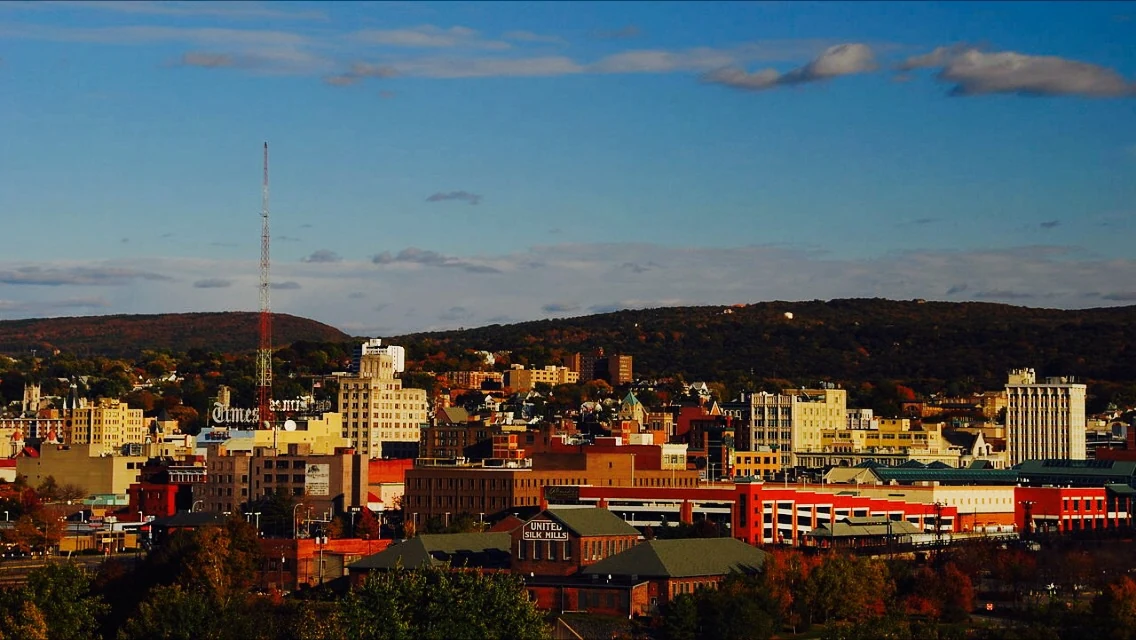
Commercial Roofers in Forty Fort, CT
Commercial roofers serving Forty Fort, CT should document leak sources, wet insulation, drainage, edge details, penetrations, and repair history before recommending a scope. Forty Fort is a small borough named for the original forty Connecticut settlers who fortified the site in the 1770s, and today its commercial footprint splits between the professional offices along Wyoming Avenue and the light commercial and aviation-related buildings near Wyoming Valley Airport at its edge. Two different building types, two different sets of roof considerations, both handled the same careful way.
Professional Offices Along Wyoming Avenue
The office buildings along Forty Fort's stretch of Wyoming Avenue tend to be smaller professional spaces - medical offices, insurance agencies, small firms - housed in buildings that mix converted residential structures with purpose-built low-rise office construction. Roof systems here range from steep-slope shingle on the converted buildings to low-slope membrane on the purpose-built ones, and we assess each on its own terms rather than applying a single approach across the corridor.
Office tenants run on a schedule that depends on quiet, uninterrupted client meetings and consistent business hours. A roof crew running a compressor or a nail gun overhead during a client appointment is a real problem for a professional office in a way it wouldn't be for a warehouse. We coordinate timing directly with tenants and property managers so disruptive work happens outside of the hours that matter most to them.
Buildings Near Wyoming Valley Airport
Forty Fort sits at the edge of Wyoming Valley Airport, and the light commercial and aviation-support buildings in that area - hangars, small maintenance facilities, support offices - carry different roof demands than a Main Street office. Hangar roofs are typically large-span metal structures, often with fewer penetrations but larger unsupported spans that need careful attention to fastener pattern and panel seam integrity, particularly given how exposed these buildings are to wind loading on open airport ground.
We plan any work on airport-adjacent buildings with an eye toward operational schedules there too - aircraft movement and hangar access have their own logistics that a roof crew has to work around, not against.
Two Building Types, One Standard of Assessment
Whether it's a converted residential building turned medical office or a large-span hangar roof, we start the same way: an honest look at current condition, a test cut where the history isn't documented, and a written recommendation that matches the roof's actual state rather than a generic sales pitch.
- Steep-slope and low-slope assessment for converted and purpose-built office buildings
- Scheduling coordinated around client meeting hours for professional offices
- Large-span metal roof fastener and seam inspection for hangar-type buildings
- Wind-loading awareness for open, airport-adjacent building sites
- Coordination with facility operations for airport-edge work windows
Winter Weather on a Mix of Roof Types
Forty Fort's mix of steep-slope and low-slope roofs means winter prep looks different building to building. Steep-slope roofs on the older converted office buildings need attention to ice damming at eaves and valleys, while the flat-roof purpose-built offices and airport-edge buildings need drainage and scupper checks ahead of lake-effect snow events. We tailor the pre-winter inspection to the roof type rather than running one checklist across every building.
Working With Property Managers on Multi-Tenant Office Buildings
Several of Forty Fort's office buildings house multiple small tenants under one property manager, which means roof decisions often go through someone who isn't on site daily. We document every visit - photos, written condition notes, clear next-step recommendations - so a property manager can make an informed call without needing a personal walkthrough every time.
Where a multi-tenant office building has several small suites on separate leases, we're careful to note which section of roof corresponds to which tenant space in our reporting. That level of detail matters when a property manager needs to explain a repair cost or a temporary access restriction to an individual tenant.
Fitting Into the Borough's Small Scale
Forty Fort is a small borough, and most of its commercial roof jobs are modest in scope compared to the industrial buildings in Jenkins Township or the warehouse parks further out. We size our crews and equipment to match rather than over-mobilizing for a small office roof, which keeps costs reasonable without cutting corners on the actual assessment or workmanship.
Frequently Asked Questions
Can you schedule roof work around our office's client appointment hours?
Yes. We coordinate directly with tenants and property managers to keep disruptive work - anything loud or vibration-heavy - outside the hours that matter most for client-facing offices.
Do you have experience with hangar or large-span metal roofs near the airport?
Yes, including fastener pattern and seam integrity checks specific to large-span metal roofs exposed to open-ground wind loading.
Our building was originally a house - does that change the roof approach?
Often, yes. Converted residential buildings frequently have steep-slope roof systems that need a different inspection and repair approach than a purpose-built low-slope office roof, and we assess accordingly.
How do you handle roof issues for a property manager who isn't on site regularly?
We document every visit with photos and written condition reports so a manager overseeing multiple properties has what they need to make a decision without a personal site visit each time.
What's the biggest winter risk for Forty Fort's office buildings?
It depends on roof type - ice damming on steep-slope converted buildings, and drainage or ponding issues on flat-roof offices and airport-edge buildings during heavy lake-effect snow.
Do you handle both the office buildings and the airport-adjacent hangar roofs?
Yes. We assess both building types with the same core process - condition inspection, honest scope recommendation - adjusted for the specific demands of each roof type and site.
Ready to review the roof scope?
Request a Roof AssessmentRelated Commercial Roofing