
Commercial Roofing Contractors Plains Township, PA
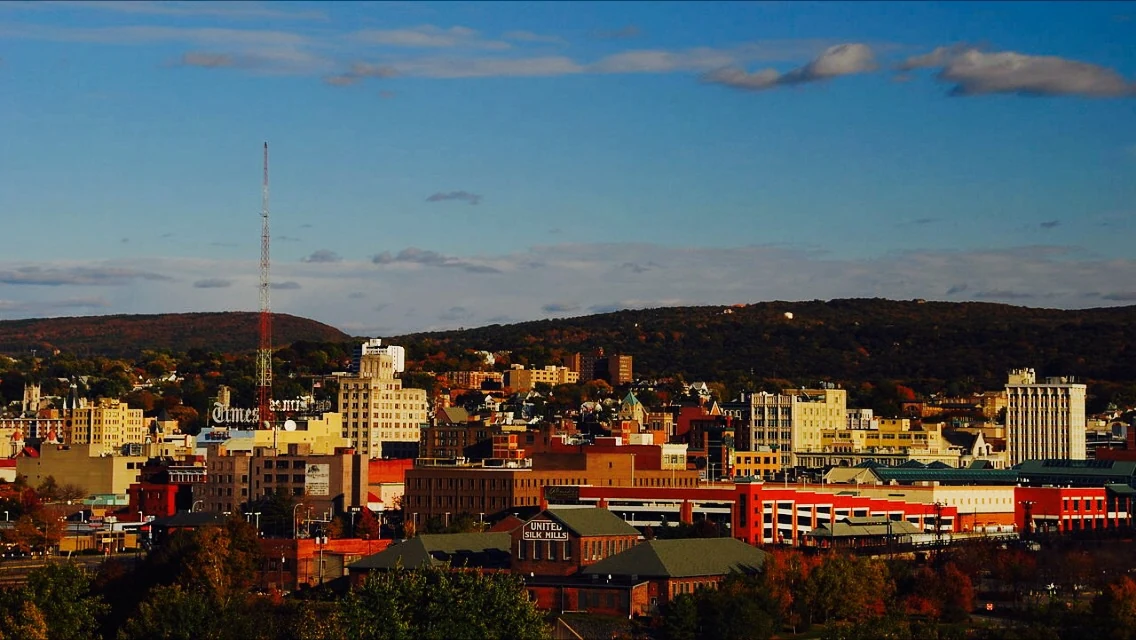
Commercial Roofers in Plains Township, PA
Commercial roofers serving Plains Township, PA should document leak sources, wet insulation, drainage, edge details, penetrations, and repair history before recommending a scope. Plains Township's roofline is dominated by Mohegan Pennsylvania: a casino floor, hotel tower, and entertainment complex that runs on a 24-hour schedule, plus the retail plazas strung along Route 315 that catch the overflow traffic. Commercial Roofing of Scranton plans work here around a building that never posts a closed sign, and around retail neighbors that keep more conventional hours. Those two operating rhythms rarely line up on the calendar, so the scheduling plan for one almost never works for the other.
No Downtime to Work Around
A casino floor generates heat, moisture, and foot traffic around the clock, and the roof over it takes wear differently than a daytime-only retail building. HVAC equipment serving a gaming floor runs harder and longer, which means more rooftop units, more curb penetrations, and more cumulative vibration on flashing details over the years. Because the building never fully empties out, we can't plan around a slow overnight window the way we would on a retail box. Instead we section the roof and coordinate directly with facilities staff to keep noisy work away from guest rooms and active event space below.
The hotel tower adds its own layer: parapet walls at height, window-washing anchor points to work around, and a roof deck that sees more wind exposure than the single-story plazas nearby. Flashing details at parapet corners on a tower roof take more wind load than the same detail on a one-story retail building, and that shows up as the first place a membrane starts to fail.
The Plazas Along Route 315
The retail plazas near the casino run on a more familiar schedule, daytime hours, occasional evening traffic, but they share the same low-slope membrane construction as everything else in this stretch of the valley. Most are single-story strip centers with mechanically attached TPO or older ballasted systems, and most have been recovered at least once since original construction. We see a lot of pitch pans at satellite dishes and rooftop signage conduits on these buildings, added after the original roof went down and rarely detailed as well as the field membrane around them.
Drainage on these plazas depends heavily on internal drains rather than roof edge scuppers, and a clogged internal drain on a flat retail roof backs up fast during a heavy storm. We check drain strainers and sumps as a standard part of any inspection here, not as an extra line item.
Matching the System to a High-Traffic Roof
For the casino complex, we lean toward membrane systems with proven wind uplift ratings and walk pads at service paths, since rooftop equipment on that scale gets serviced constantly and foot traffic wears an unprotected membrane fast. For the plazas, a straightforward mechanically attached TPO or a silicone coating over sound existing membrane covers most of what we find, unless a moisture scan turns up wet insulation that changes the plan.
- Worn membrane along walk paths to rooftop mechanical units
- Parapet flashing separating at tower corners under wind load
- Clogged internal drains backing up during heavy rain
- Pitch pans at signage and satellite mounts drying out and cracking
- Ponding near HVAC condensate lines draining onto the membrane
- Loose ballast or gravel migrating toward roof edges
Documenting Storm Damage on a Property This Size
A wind or hail event that hits the casino complex and the surrounding plazas at the same time generates a lot of roof area to assess, and getting ahead of it matters for both the facility's own maintenance budget and any insurance claim tied to the damage. We document affected sections with photos and a written scope covering the tower roof, the casino's low-slope field, and each plaza separately, since insurers often want damage broken out by building rather than treated as one blanket claim.
We don't make promises about how a claim will be handled, that's between the property and the insurer, but a clear, building-by-building record makes that conversation faster on both sides.
Timing matters too. We schedule the assessment as soon as it's safe to get on the roof after a storm, since a delayed inspection can leave water finding its way into insulation for days before anyone realizes a section needs attention.
Common Questions From Plains Township Facilities Teams
How do you schedule work on a building that operates 24 hours a day?
We coordinate directly with facilities staff to identify sections of the roof over unoccupied or low-sensitivity space and work those first, keeping noisy tear-off away from guest rooms and event areas.
Do hotel tower roofs need a different system than the single-story plazas?
Often yes. Wind exposure at height changes what fastening pattern and parapet flashing detail makes sense, and we specify for the actual conditions on that roof rather than defaulting to whatever's on the plaza next door.
What's the biggest source of leaks on a casino-scale roof?
Parapet corners and rooftop unit curbs, almost always, given how much equipment and edge length these roofs carry.
Can you inspect the retail plazas without disrupting tenants?
Yes, roof inspections happen from the roof deck itself and don't require entering tenant space in most cases.
Do you provide documentation after wind or hail events?
We document damage with photos and a written scope so you and your insurer are working from the same factual record. We break that documentation out building by building across the complex rather than treating it as one combined claim.
Ready to review the roof scope?
Request a Roof AssessmentRelated Commercial Roofing