
Commercial Roofing Contractors West Pittston, PA
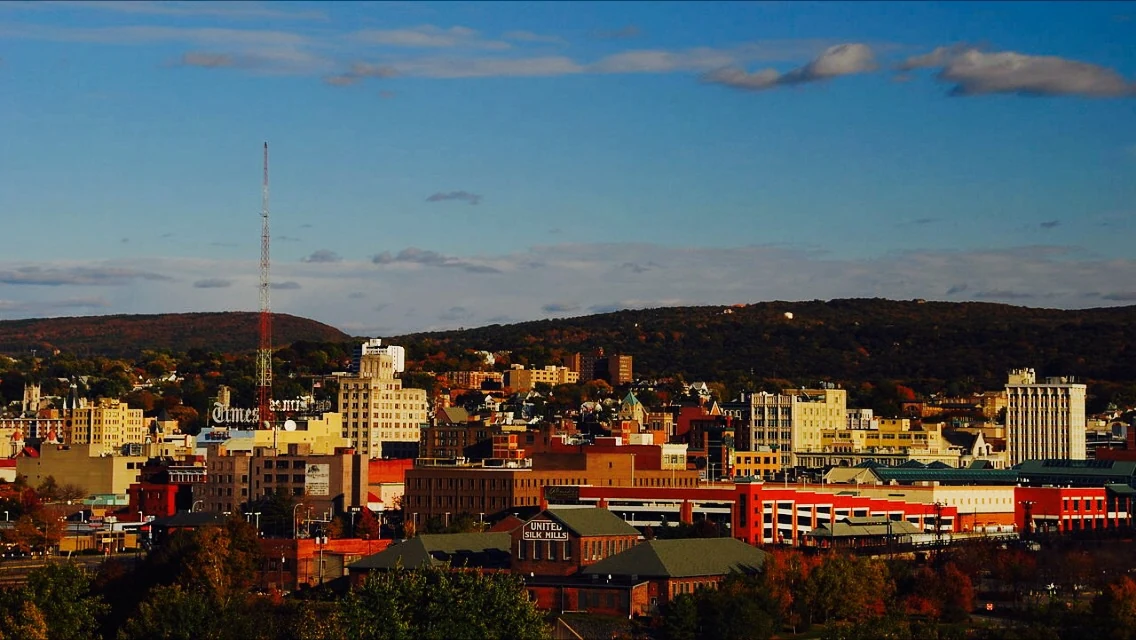
Commercial Roofers in West Pittston
A practical commercial roofing plan for West Pittston properties separates urgent leak control from repair, coating, maintenance, and replacement decisions supported by photos and condition findings. West Pittston sits directly across the Susquehanna from Pittston, a small river borough of storefront commercial buildings that earned a reputation for holding up better than its neighbors during the 1972 Hurricane Agnes flood - locals still call it "Sturdyville." That history says something real about how this borough's older buildings were built, but it doesn't mean the roofs are exempt from ordinary wear, and we assess them the same way we would anywhere else: carefully, and starting with drainage.
Small Storefronts, Individual Attention
West Pittston's commercial buildings are mostly small-footprint storefronts along the borough's main corridors - a hardware store, a salon, a small office, a corner restaurant - rather than large plazas or industrial buildings. That means roof jobs here are typically single-owner, single-decision, straightforward projects, but the buildings themselves often carry decades of individual repair history that varies wildly from one storefront to the next. We treat every West Pittston roof as its own case rather than assuming a shared pattern across the block.
A lot of these buildings have living space or storage above the retail floor, which changes how we think about insulation and moisture management compared to a purely commercial single-story building. We factor that into our recommendations rather than applying a generic commercial approach.
River Proximity and What It Means for Drainage
Being sited along the Susquehanna means West Pittston's storm drainage infrastructure and the roof drainage on individual buildings both have to handle more water, more often, than a borough set back from the river. We check scupper and gutter capacity closely on every assessment here, and we pay particular attention to how a roof sheds water toward the street versus toward a rear alley or shared drainage path with a neighboring building.
- Individual roof assessment for single-owner storefront buildings
- Drainage capacity review weighted toward river-proximity rainfall patterns
- Insulation and moisture planning for buildings with occupied space above retail
- Off-hours scheduling to avoid disrupting small-business customer traffic
- Emergency tarping and dry-in for storm-related roof failures
Older Roof Systems on a Historic Main Street
Many of West Pittston's storefront roofs are flat or low-slope systems that have gone through at least one recover cycle since original construction. We open a test section before recommending replacement scope, since a building with a sound original deck often just needs a properly detailed recover rather than a full tear-off - a meaningfully lower cost for an owner running a small storefront business who can't absorb a large capital expense without warning.
Keeping a Small Business Open During the Work
A storefront business in West Pittston doesn't have the luxury of shifting operations to a back-of-house area while the roof gets worked on - the whole building is the operation. We schedule the loudest and most disruptive phases for early morning before opening or after close, and we keep material staging out of customer sightlines and parking wherever the site allows it.
For a small business owner, a roof job that drags on with no clear timeline is its own kind of cost. We give a defined schedule up front and stick to it.
Freeze-Thaw and Ice Damming Along the River
The extra ambient moisture near the river adds to freeze-thaw stress on these older roofs every winter, and ice damming at eaves and parapets is a recurring issue on buildings where insulation coverage is uneven from past piecemeal repairs. We look at insulation continuity as part of any roof assessment here, rather than only the membrane surface.
Gutters and downspouts on these older buildings are frequently original or close to it, and undersized for the rainfall volumes we see today. Replacing or supplementing an original gutter run isn't glamorous work, but it's often the single change that does the most to keep water away from a building's foundation and roof edge during a heavy storm.
A Straightforward Path for Owners Who Don't Know Where to Start
A lot of owners along West Pittston's main corridors inherited a building with no clear roof history - no records of when it was last replaced, what system is up there, or what's been patched over the years. We start these conversations with a straightforward inspection and a written condition report, not a sales pitch, so an owner has a real basis for deciding what to do next.
Frequently Asked Questions
Does our building's flood-resistant reputation mean the roof doesn't need regular attention?
No - that reputation is about structural resilience during past flood events, not roof membrane condition, which still ages and wears the same way it would anywhere else. We recommend regular inspection regardless of a building's history.
Can you work on our storefront without closing during business hours?
In almost every case, yes. We schedule disruptive work before opening or after close and keep staging out of customer areas.
Our building has apartments or storage above the retail space - does that change the roof plan?
Yes. We factor in insulation and moisture management for occupied space above a commercial floor rather than applying a purely commercial approach.
Is a recover an option for our older storefront roof, or do we need full replacement?
We check with a test cut before recommending either. A sound deck under an aging membrane is often a good recover candidate, which costs meaningfully less than a full tear-off.
What do you do if a leak develops during a storm?
We prioritize emergency tarping and dry-in to stop water intrusion immediately, then schedule the permanent repair once conditions allow safe access.
Ready to review the roof scope?
Request a Roof AssessmentRelated Commercial Roofing