
Commercial Roofing Contractors Wilkes Barre, PA
Commercial Roofers in Wilkes Barre, WY
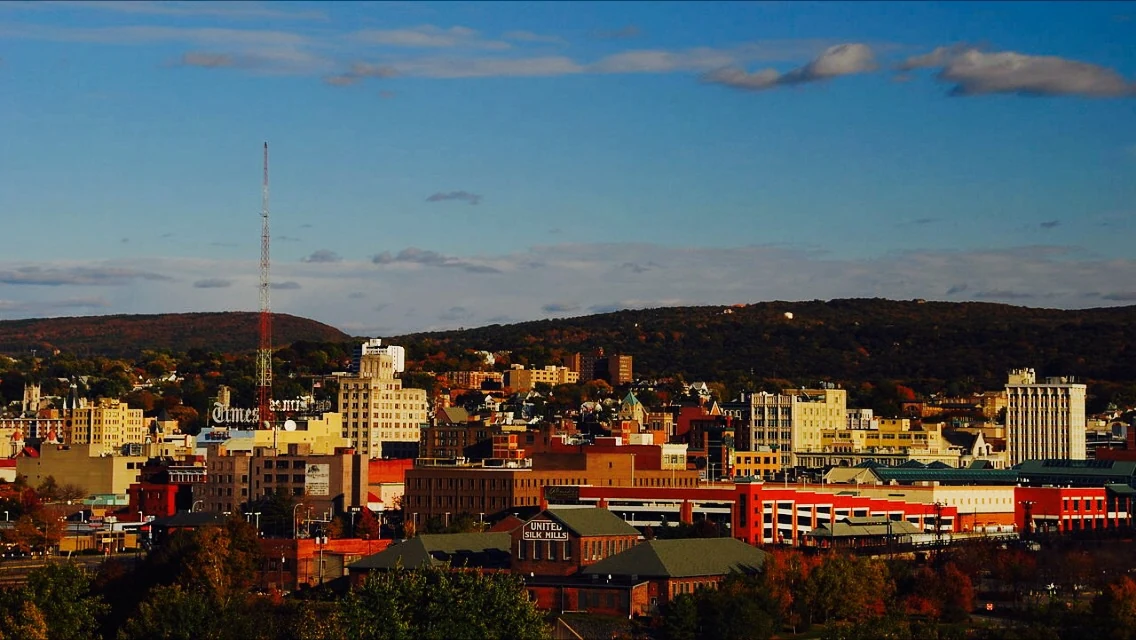
Commercial roofing in Wilkes Barre, WY should begin with a documented assessment of membrane condition, seams, flashings, drainage, penetrations, and moisture before repair, coating, or replacement is selected. Wilkes-Barre's commercial core sits behind a floodwall for a reason, and most of the buildings inside it are older than the levee itself. Masonry office blocks, the county courthouse complex, college buildings, and hospital wings around Public Square carry flat and low-slope roofs that have been recovered more than once. We work on these buildings without pretending they're new construction - the deck, the parapets, and the mechanical loads all reflect a downtown that grew up over a century, not a decade.
Flat and Low-Slope Roofs on a Century-Old Downtown
Most of the commercial stock between the river and the courthouse square is built-up roofing or old modified bitumen laid over a masonry or timber deck that was never designed for today's rooftop HVAC load. Before we quote a recover or a tear-off, we walk the deck for soft spots, check how the roof drains toward original scuppers that may be undersized for current storm intensity, and look at how much dead load the parapets and cornices are already carrying from prior overlays.
TPO and reinforced EPDM are our go-to replacement systems here because they take mechanical attachment well on older decks without adding much weight, and they give facilities staff a membrane that's easy to patch when a rooftop unit gets swapped out mid-lease. Where a building owner wants to keep the assembly closer to what's already there, we'll spec a torch-applied modified bitumen cap sheet instead.
Insulation condition matters as much as the membrane on a building whose permit history has been on file with the county for decades. A lot of these structures have had insulation added in layers as codes and energy costs changed over the years, and by the time we open a test cut we often find three or four different insulation generations stacked under one cap sheet. We document what's actually there before recommending a fix, because guessing at R-value and moisture content on a building this old leads to change orders nobody wants once the tear-off starts.
Hospital and Medical Office Reroofing Without Shutting Down a Unit
Reroofing a hospital wing in an occupied downtown medical building means the job has to work around negative-pressure rooms, imaging equipment sensitive to vibration, and a building that can't lose power to its rooftop units for more than a few minutes at a time. We sequence tear-off in sections small enough to dry in and inspect before end of shift, keep crane picks and generator noise scheduled around procedure hours, and coordinate directly with facilities engineers instead of a general contractor's site office.
The same discipline applies to the office and institutional buildings nearby - courthouse annexes, college administration buildings, professional offices - where tenants and staff are working under the roof deck every day the crew is up top.
Winter Loading in the Wyoming Valley
The valley collects lake-effect snow bands that dump more locally than the forecast for the wider region suggests, and older cornices and built-up parapets on downtown buildings are where ice dams form first. We check drain lines and scupper screens every fall specifically because a clogged drain plus a hard freeze is how a flat roof in this part of downtown ends up with standing ice load it was never sized for.
- Ponding water that doesn't clear 48 hours after a storm
- Interior ceiling stains near mechanical penetrations or parapet walls
- Bubbling or alligatored cap sheet on south-facing slopes
- Rooftop unit curbs pulling away from the membrane
- Scuppers or drains packed with granule wash and debris
- Visible daylight or rust at flashing seams after a freeze-thaw cycle
Courthouse, College, and Arena-District Commercial Roofs
Buildings near Public Square and the arena district carry a different kind of pressure - weekend event traffic, restaurant and retail tenants who can't have a work crew blocking a loading door on a Friday, and older storefronts with roofs that were never meant to carry rooftop dining or signage structures. We schedule around event calendars and tenant hours rather than assuming a downtown building runs a standard nine-to-five.
For property managers running several downtown addresses at once, we'll build a rolling inspection schedule so no building in the portfolio goes more than a year without eyes on the membrane, and so budget requests for reroofing come with real photos and moisture-scan data instead of a guess.
Rooftop mechanical placement is another downtown-specific wrinkle. Buildings that added condenser units or generators after original construction sometimes have equipment clustered in a way that makes future membrane replacement harder to sequence, since a crew has to work around units that can't come offline. When we quote a reroof on one of these buildings, we plan the tie-in and unit-curb sequencing up front rather than discovering the conflict mid-project.
Common Questions About Commercial Roofing in Wilkes-Barre
Can a hospital or medical building stay open during a full reroof?
Yes, in almost every case. We break the roof into zones sized to what we can tear off and dry in within a single shift, so there's never an open deck over an occupied space overnight. Procedure rooms and equipment areas get scheduled around directly with the facility.
Why does downtown flooding history matter for a roof decision?
It doesn't change the roof assembly itself, but it does mean many of these buildings already carry drainage and structural quirks from decades of patch repairs after high water and heavy snow. We factor that history into the deck inspection rather than treating the building as a blank slate.
What roof system holds up best on older masonry buildings downtown?
Mechanically attached TPO and reinforced EPDM are usually the best fit - lighter than a full new built-up system and easier to flash around the irregular parapets common on buildings from the early 1900s.
How often should a downtown flat roof get inspected?
Twice a year at minimum - late spring after snow load and late fall before freeze - plus after any storm with sustained wind or hail. Buildings with older cap sheet or visible ponding need more frequent checks.
Do you work around courthouse and college security requirements?
We do. Institutional buildings downtown often require crew badging, scheduled access windows, and advance notice for roof access - we build that into the project timeline up front rather than discovering it on day one.
Ready to review the roof scope?
Request a Roof AssessmentRelated Commercial Roofing