
Commercial Roofing Contractors Carbondale, PA
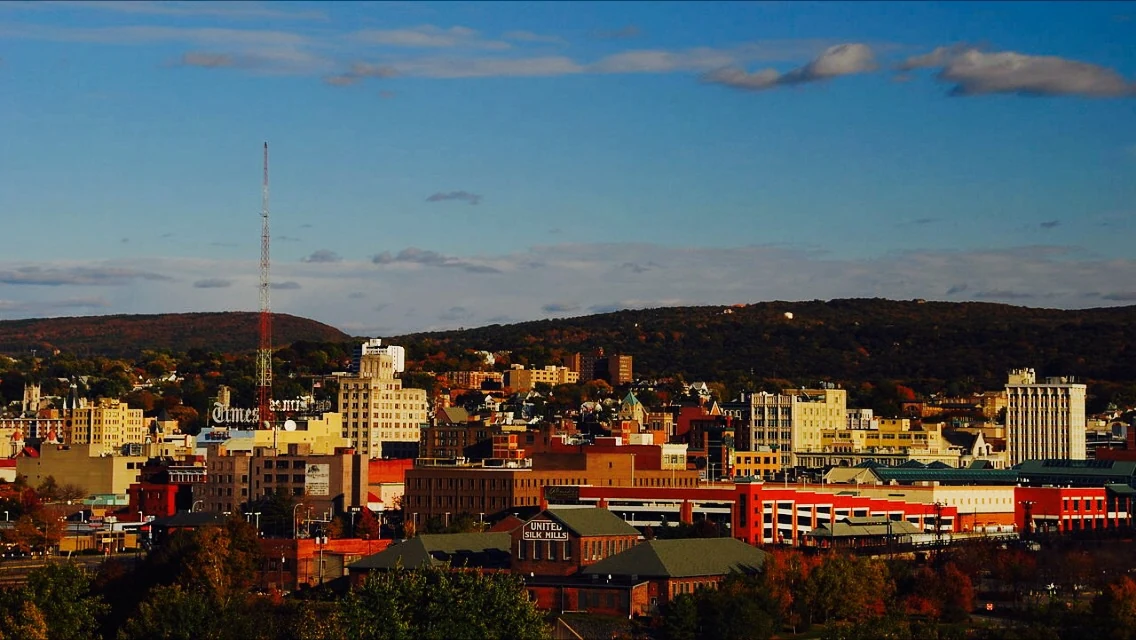
Commercial Roofers in Carbondale
A practical commercial roofing plan for Carbondale properties separates urgent leak control from repair, coating, maintenance, and replacement decisions supported by photos and condition findings. Carbondale sits up-valley from Scranton, its own small city with its own building stock - the Pioneer City, first in the country lit by electric streetlights, and a downtown that's still working out of storefronts and mill buildings that predate anything code required for roof decking. That history is exactly what makes roof work here different from a suburban plaza job: you don't know what's under the membrane until you cut into it.
What's Under an Old Carbondale Roof
A lot of Carbondale's commercial buildings started as something else - a mill, a warehouse, a storefront with an apartment above it - before they became the retail or light-industrial space they are today. The roof decks reflect that history: full-dimension wood plank over timber framing in some buildings, poured gypsum deck in others from a mid-century renovation, occasionally a section of steel deck patched in where a section collapsed or was rebuilt decades ago. We don't assume deck type on a Carbondale building. We cut a test section before quoting anything structural, because guessing wrong on an old plank deck means a change order nobody wants.
Parapet walls on these older downtown buildings are often masonry, and the coping and through-wall flashing details are usually the actual source of a leak that everyone blames on the roof field. We check those details as carefully as the membrane itself.
Working a Whole Block, Not One Building
Downtown Carbondale's storefronts share party walls and, in several cases, share roof structure across adjoining buildings. A leak reported by one tenant can trace back to a neighboring roof, and access for equipment is tighter than a standalone building with its own lot. We plan crane or lift staging around what the block can actually accommodate - sidewalk width, adjoining businesses staying open, parking that can't be blocked for a full day.
We keep foot traffic and adjoining storefronts running while we work overhead. That means netting and containment for tear-off debris, and timing the loudest phases for hours when the block is quietest.
Snow Load Up the Valley
Carbondale sits higher and further up-valley than Scranton proper, and it catches the lake-effect snow bands a little harder and a little longer into the season. Flat roofs on old mill buildings with minimal drainage redundancy - sometimes a single internal drain feeding a roof that was never re-sloped when the building's footprint changed - are the ones we watch closest heading into winter.
- Test cuts to identify deck type before quoting repair or replacement
- Parapet coping and through-wall flashing inspection on masonry buildings
- Coordinated access planning for shared-wall downtown storefronts
- Pre-winter drainage checks on old mill-building roofs with limited redundancy
- Documentation for insurance and historic-building considerations where relevant
Recover Versus Replace on a Building With History
Not every old Carbondale roof needs a full tear-off. If the deck is sound and the insulation hasn't taken on water, a recover system over the existing roof can extend service life at a fraction of full replacement cost - but that call only gets made after we've confirmed the deck is dry and structurally sound underneath. Recovering a wet deck just traps the problem.
Where the existing roof has failed past that point, we plan tear-off in sections small enough to dry in fully each day, particularly on buildings where the space below is occupied and can't tolerate an open roof overnight.
Light Industrial on the Edges of Downtown
Outside the downtown core, Carbondale has pockets of light industrial and warehouse space in buildings that were part of the city's manufacturing history. These tend to have larger, simpler roof fields than the downtown storefronts, but often the same age and the same layered-repair history. We assess them the same way - test cuts first, honest read on remaining service life, and a plan that fits the building's actual use today rather than what it was built for a century ago.
Some of these buildings have been split into multiple smaller tenant spaces since their industrial days, which means mechanical penetrations, exhaust vents, and rooftop equipment have accumulated in an ad hoc pattern over time rather than a single coordinated design. We map every penetration during our assessment so we know exactly what's up there before recommending a repair or replacement scope, rather than discovering surprises mid-job.
What Being Up-Valley Changes About Scheduling
Carbondale's distance from Scranton means material delivery and crew logistics need a little more lead time built in, particularly for specialty membrane or metal panel orders that come from regional distribution points. We plan that into every project timeline up front so an owner isn't caught by a delivery delay mid-job. It's a small thing, but it's the kind of detail that keeps a schedule honest instead of optimistic.
Common Questions From Carbondale Building Owners
How do you handle a roof on a building that's changed use several times over the decades?
We start with a test cut to confirm deck type and condition rather than assuming based on the building's current use. That tells us what repair or replacement options are actually available.
Can you work on a downtown storefront without closing the sidewalk or blocking neighboring businesses?
In most cases, yes. We plan equipment staging and containment around what the block can accommodate and keep disruptive work to off-peak hours.
Is our old mill-building roof a candidate for a recover instead of full replacement?
Only if the deck is dry and structurally sound. We confirm that before recommending a recover - putting a new membrane over a wet deck doesn't solve anything.
Does Carbondale get worse snow load than Scranton?
Being further up-valley, Carbondale tends to catch lake-effect snow bands a bit harder and longer into the season, which is why we run pre-winter drainage checks with extra attention on older, flatter roofs here.
Do you handle both the roof membrane and the parapet or flashing repairs on masonry buildings?
Yes, including coping and edge metal repair alongside membrane work, since on an old masonry building those details are frequently the actual leak source.
Ready to review the roof scope?
Request a Roof AssessmentRelated Commercial Roofing