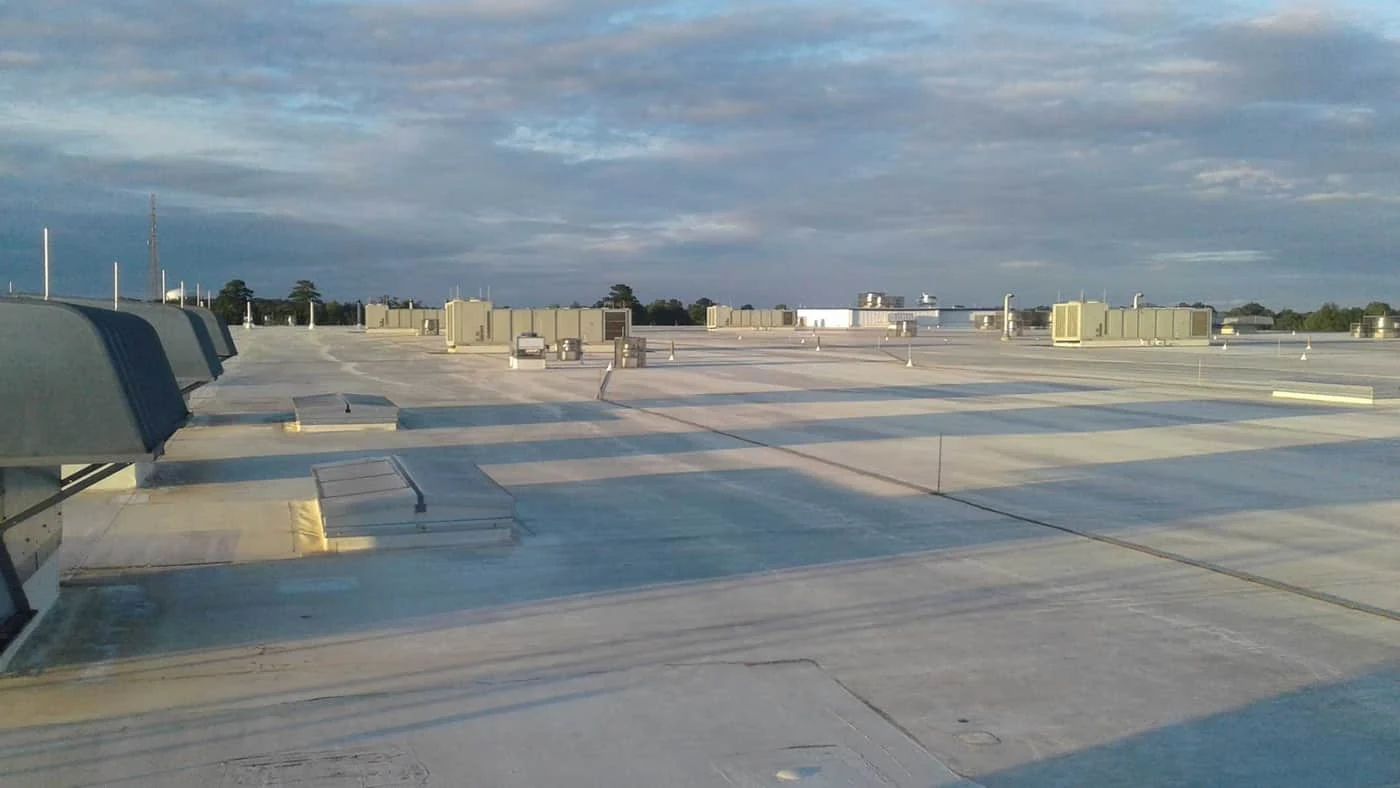
Cold Storage Roofing in Scranton, PA
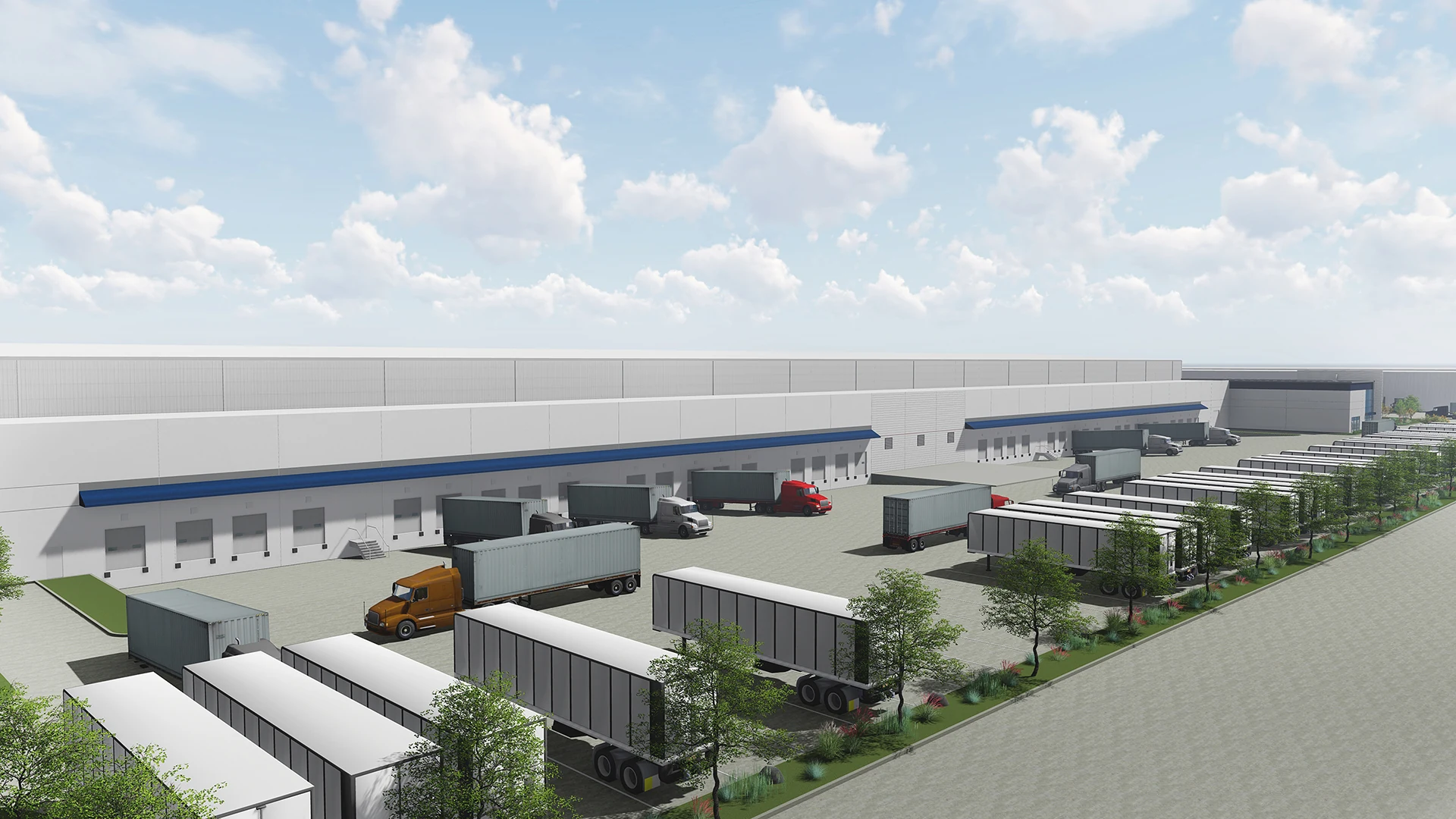
Freezer Roofs Where a Vapor Leak Costs More Than a Water Leak
Food distribution has followed the same I-81 corridor that pulled Amazon and Chewy into this valley, and cold storage buildings carry a roofing problem that standard dry warehouses never deal with: moisture moving from the inside out. A freezer roof that fails from within can ruin insulation value long before anyone sees a drip inside the building, and by then the damage is already extensive.
Why Cold Storage Roofs Fail Differently
A standard warehouse roof worries about water getting in. A cold storage roof has to worry just as much about warm, moist interior air working its way up into the insulation and condensing there, where it freezes, thaws, and slowly destroys the insulation's R-value from the inside without ever producing a visible ceiling stain. By the time energy bills or interior condensation reveal the problem, the insulation underneath the membrane may already be saturated.
We treat vapor barrier continuity as the priority on these roofs, not an afterthought behind membrane selection, because a perfect membrane over a compromised vapor barrier still fails the building from below.
Vapor Barrier Detailing at Every Penetration
Every pipe, conduit, and curb that passes through a cold storage roof deck is a place where the vapor barrier can be interrupted, and interruptions are where these roofs actually fail. We detail penetrations with the same care most contractors reserve for the membrane's field seams, since a freezer roof's weak points are almost never in the open field.
Rooftop refrigeration equipment adds curbs, condensate lines, and access platforms that a dry warehouse roof doesn't carry, and each one needs vapor barrier tie-in done correctly the first time, because reopening a sealed cold storage roof to fix a penetration detail means disturbing insulation that's difficult to fully dry out afterward.
Condensation Patterns Unique to This Climate
The valley's humid summers and freeze-thaw winters both stress a cold storage roof, but in different ways. Summer humidity pushes moisture-laden air harder against the vapor barrier from outside conditions meeting a cold interior, while winter's repeated freeze and thaw cycles work condensation trapped in insulation through expansion and contraction that gradually breaks down insulation board over multiple seasons.
We inspect these roofs with infrared scanning where appropriate, since wet insulation under an intact-looking membrane doesn't show up on a visual walk but shows up clearly in a thermal scan, letting us target repairs to actual wet zones instead of guessing.
- Refrigerated distribution warehouses
- Blast-freezer and flash-freeze facilities
- Food processing plants with attached cold rooms
- Dairy and beverage cold-chain buildings
- Pharmaceutical cold-storage warehouses
- Third-party cold-chain logistics providers along I-81
Insulation Strategy for Freezer Versus Cooler Space
A hard freezer running well below thirty-two degrees needs a different insulation thickness and vapor barrier approach than an adjacent cooler section running just above freezing, and a lot of cold storage buildings in this corridor have both under one roof. We design the roof section by section rather than applying one insulation spec across a building that actually has several different interior temperature zones underneath it.
Where a building has been reconfigured over the years to add freezer capacity in what was originally cooler space, we check whether the existing roof assembly still matches the new interior conditions, since a vapor barrier sized for a forty-degree cooler doesn't necessarily hold up over a space that's since been converted to run at zero.
Minimizing Downtime on Buildings That Can't Lose Temperature
A cold storage facility can't afford to lose interior temperature during a roof project the way a dry warehouse can tolerate a temporary open section. We sequence work in smaller zones on these buildings specifically to limit how much roof area is open at once, and we schedule around the facility's own temperature monitoring thresholds so product never gets close to an unsafe range during the work.
Emergency response matters even more here than on a standard warehouse, since a storm-damaged section over active cold storage space threatens both the roof and everything stored beneath it. We prioritize same-day tarping on these accounts and coordinate directly with the facility's refrigeration technicians so temporary weatherproofing doesn't interfere with equipment access.
We also walk through staging logistics with the warehouse manager before work begins, since material and equipment access routes on a cold storage building often run through the same dock doors used for active product loading. Keeping those routes clear during business hours matters as much to the facility as the roof work itself, and we plan around it rather than treating it as a secondary detail.
Cold Storage Roofing Questions We Get
How do you know if insulation is already wet under an intact membrane?
We use infrared thermal scanning to identify wet zones that don't show up on a standard visual inspection.
Why does vapor barrier detailing matter more than membrane choice here?
Because moisture moving up from the warm interior side is usually what fails a cold storage roof, not water coming down from outside.
Can freezer and cooler sections share the same roof spec?
Not always. We design insulation and vapor barrier detail by interior temperature zone rather than applying one spec building-wide.
How do you limit temperature loss during a roof project?
We work in smaller sequenced zones and coordinate scheduling around the facility's own temperature monitoring thresholds.
What happens if a roof was converted from cooler to freezer use?
We check whether the existing vapor barrier and insulation still match the colder interior condition before recommending repairs.
Ready to review the roof scope?
Request a Roof AssessmentRelated Commercial Roofing