Black EPDM Roofing in Scranton, PA
Black EPDM on Scranton's Older Industrial and Downtown Roofs
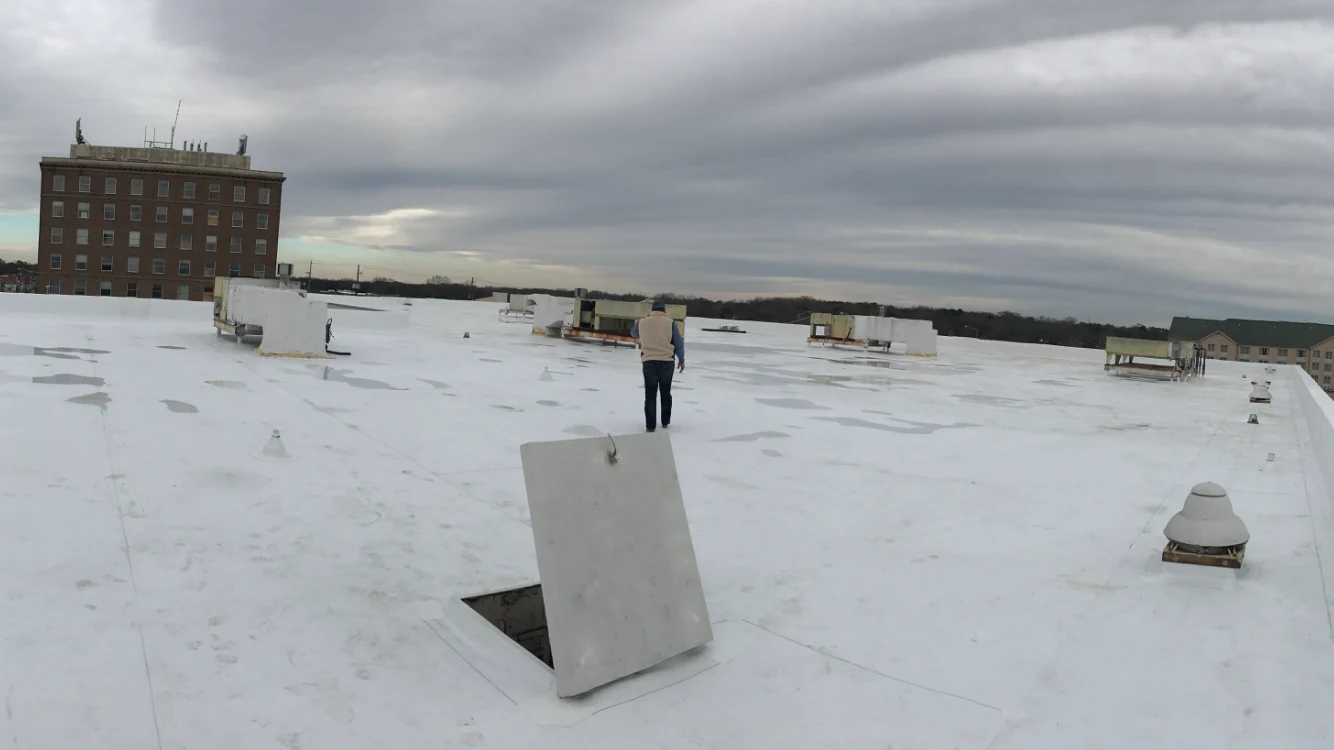
Walk the roofline above downtown Scranton, Carbondale, or the mill sections of Nanticoke and you'll find black EPDM on a lot of the older buildings, and for good reason. It's still the right membrane for a category of roof this region has plenty of: irregular decks, tight budgets, and structures built decades before anyone drew a single-ply spec sheet.
Where Black EPDM Still Makes Sense Downtown
A lot of Scranton and Carbondale's commercial buildings started life as mills, warehouses, or storefronts from the anthracite era, and their roof decks reflect that - wood plank, older steel bar joist, sometimes a mix of both across one roof where an addition got tacked on mid-century. EPDM's rubber sheet tolerates that kind of deck irregularity better than a heat-welded membrane that wants a clean, consistent substrate.
It's also the lower-cost single-ply option, which matters on a small storefront building in Old Forge or Plymouth where the ownership group is working with a tighter reroof budget than a distribution center owner along I-81.
Some of these buildings sit close enough to neighboring structures that a crew has limited staging room on the roof itself, another factor that favors EPDM's simpler installation process over a heat-welding operation that needs more equipment and clearance to run efficiently on a tight downtown footprint.
Working Around Anthracite-Era Deck Framing
These older buildings carry decades of rooftop penetrations - abandoned vent stacks, old HVAC curbs from equipment long gone, patched sections from repairs nobody documented. Before we spec anything we walk the deck and map what's actually there, because an EPDM installation over an undocumented penetration field goes sideways fast if we skip that step.
Some of these decks have settled unevenly over the years, particularly in the old mining boroughs where ground movement below older foundations isn't unheard of. EPDM's flexibility handles minor deck irregularity better than a rigid membrane would, though we still address structural concerns with the deck before laying anything down.
Field Seaming and Patch Repairs on Irregular Rooflines
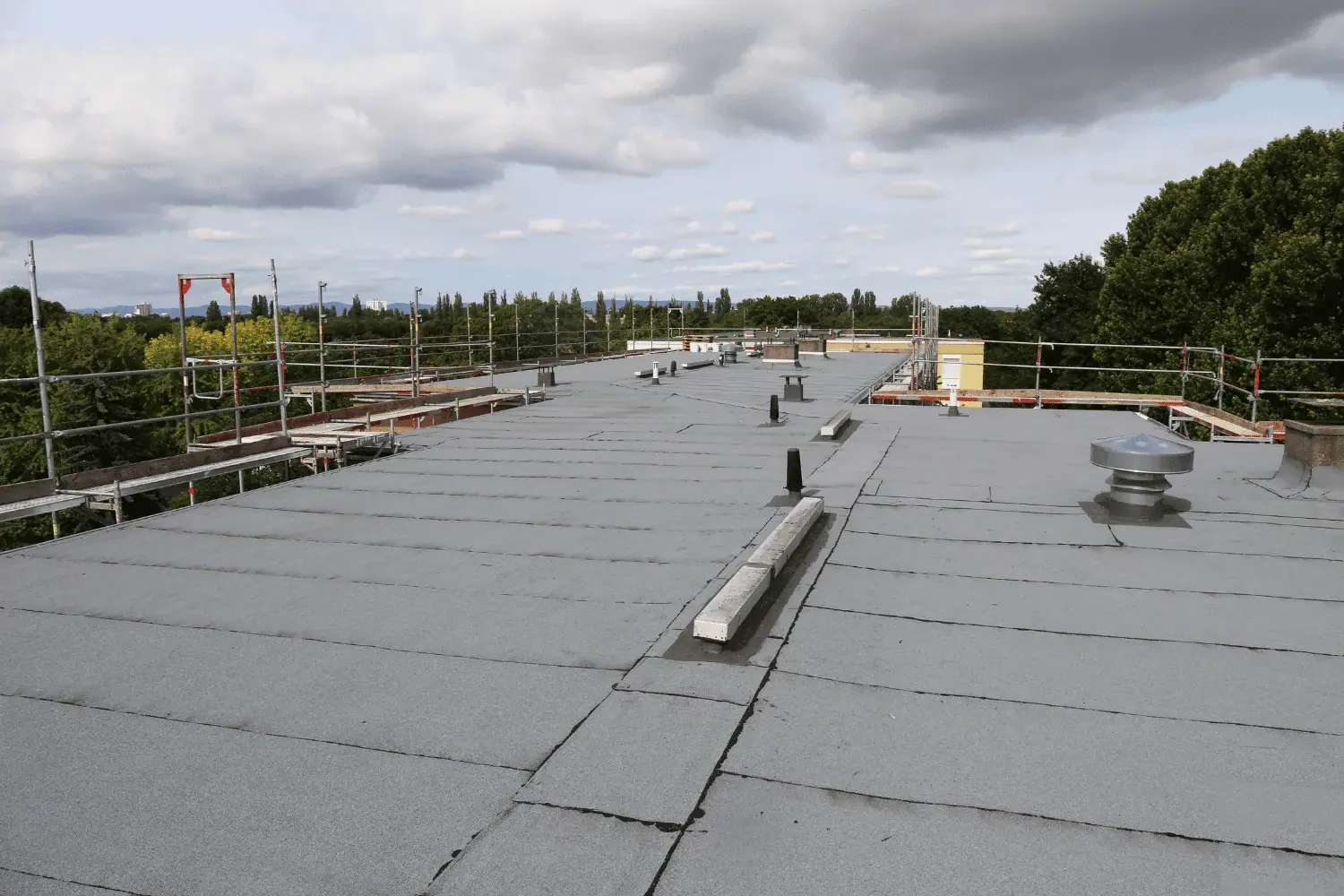
Downtown buildings rarely have a clean rectangular roof. Add a bump-out here, a mechanical penthouse there, a party wall shared with the next storefront, and you get a roofline with more field seams and detail work than a big-box roof twice the size. EPDM's seam tape system is field-repairable in a way that suits this kind of roof - a tech can cut in a patch or re-lap a seam years later without needing the specialized welding equipment a TPO repair calls for.
That repairability matters on buildings where full reroof budgets get deferred and targeted patch work carries the roof another few seasons instead.
- Irregular decks with wood plank, steel bar joist, or mixed framing from additions
- Undocumented penetration fields from decades of prior rooftop work
- Storefront and mill-town buildings on tighter reroof budgets
- Rooflines with frequent bump-outs, penthouses, and party-wall details
- Buildings where field-repairable seams matter more than heat-welded uniformity
Heat Gain and Ice-Dam Edge Behavior in NEPA Winters
Black EPDM absorbs more solar heat than a white membrane, which some owners assume helps melt snow load faster. In practice it's a mixed trade-off here: the extra heat gain can accelerate melt on the field of the roof while doing little for the roof edge, where colder air keeps meltwater refreezing into ice dams along gutters and low parapets regardless of membrane color.
We pay closer attention to edge metal and drainage detailing on these older roofs than to membrane color as an ice-dam fix, because the edge is where water backs up and finds its way into a building through decades-old flashing before the field membrane is ever the problem.
Deck Inspection Before Any Tear-Off Begins
We probe the deck at multiple points before quoting a tear-off on any building this old, because what's under the existing EPDM sometimes surprises even an owner who's held the property for years. Wood plank decks in particular can hide rot at penetration points that a surface inspection from the roof won't reveal until the old membrane comes off.
That inspection changes the bid more often on these downtown and mill-town buildings than it does on a newer flex building, since deck repair or replacement is a real possibility once tear-off starts. We flag that uncertainty with the owner up front rather than lock in a fixed price before the deck condition is confirmed.
Black EPDM Questions from NEPA Building Owners
Is black EPDM still a good option or is it outdated technology?
It's not outdated - it's a different tool for a different roof type. On irregular older decks with tight budgets, EPDM often outperforms single-ply alternatives on cost and field-repairability.
Does black EPDM make ice damming worse in winter?
Membrane color has less effect on ice damming than edge and drainage detailing does. We focus repair and reroof work on gutters, scuppers, and edge metal to address ice dams directly.
Can EPDM be patched instead of fully replaced?
Often, yes, if the membrane and deck underneath are otherwise sound. We evaluate patch versus full reroof based on the deck's condition and how much of the field membrane is still viable.
How long does black EPDM typically last on an older deck?
Service life depends heavily on deck condition, drainage, and maintenance history more than on the membrane itself. A well-maintained EPDM roof on a sound deck can perform for decades; a neglected one on a compromised deck won't.
Is EPDM a good fit for a small storefront building downtown?
Frequently, yes - the lower material cost and field-repairable seams suit smaller commercial buildings with irregular rooflines and tighter budgets well.
Ready to review the roof scope?
Request a Roof AssessmentRelated Commercial Roofing