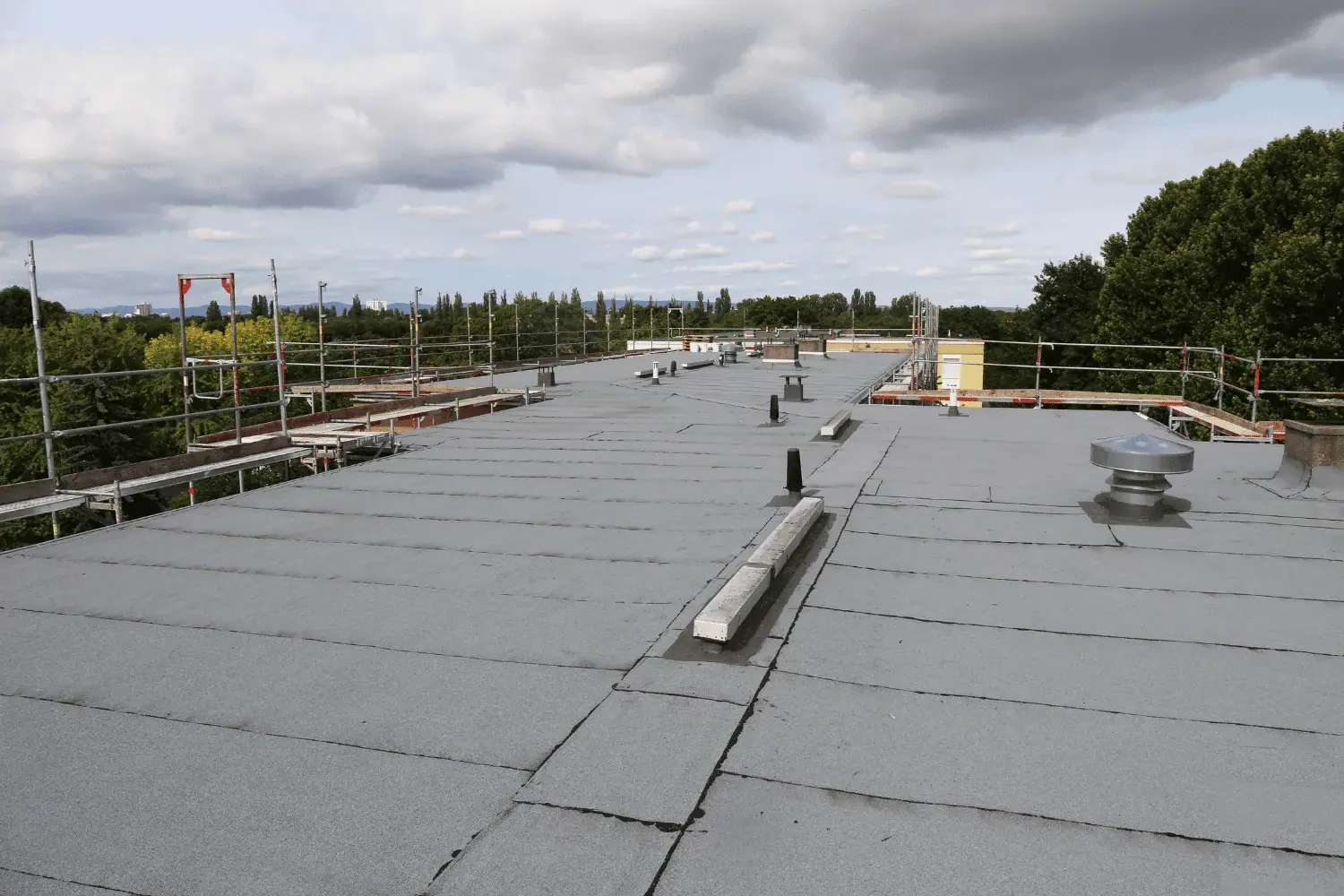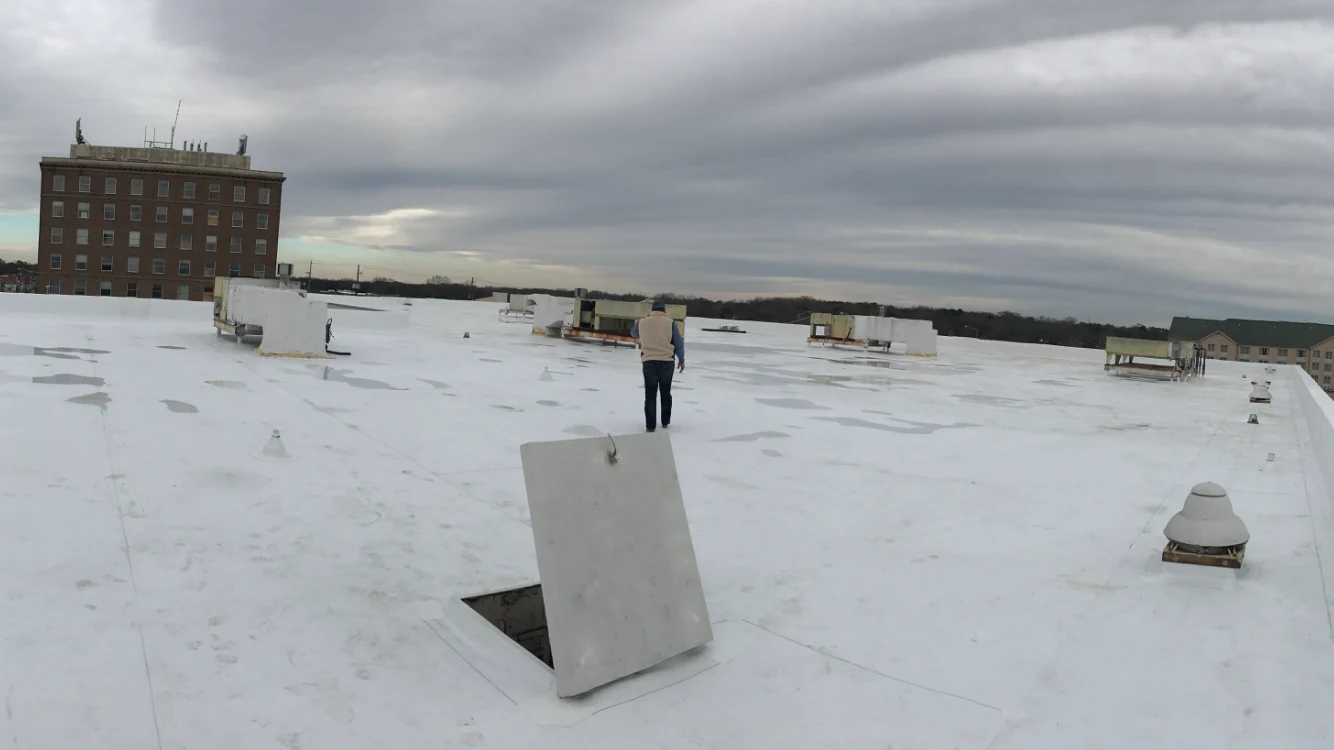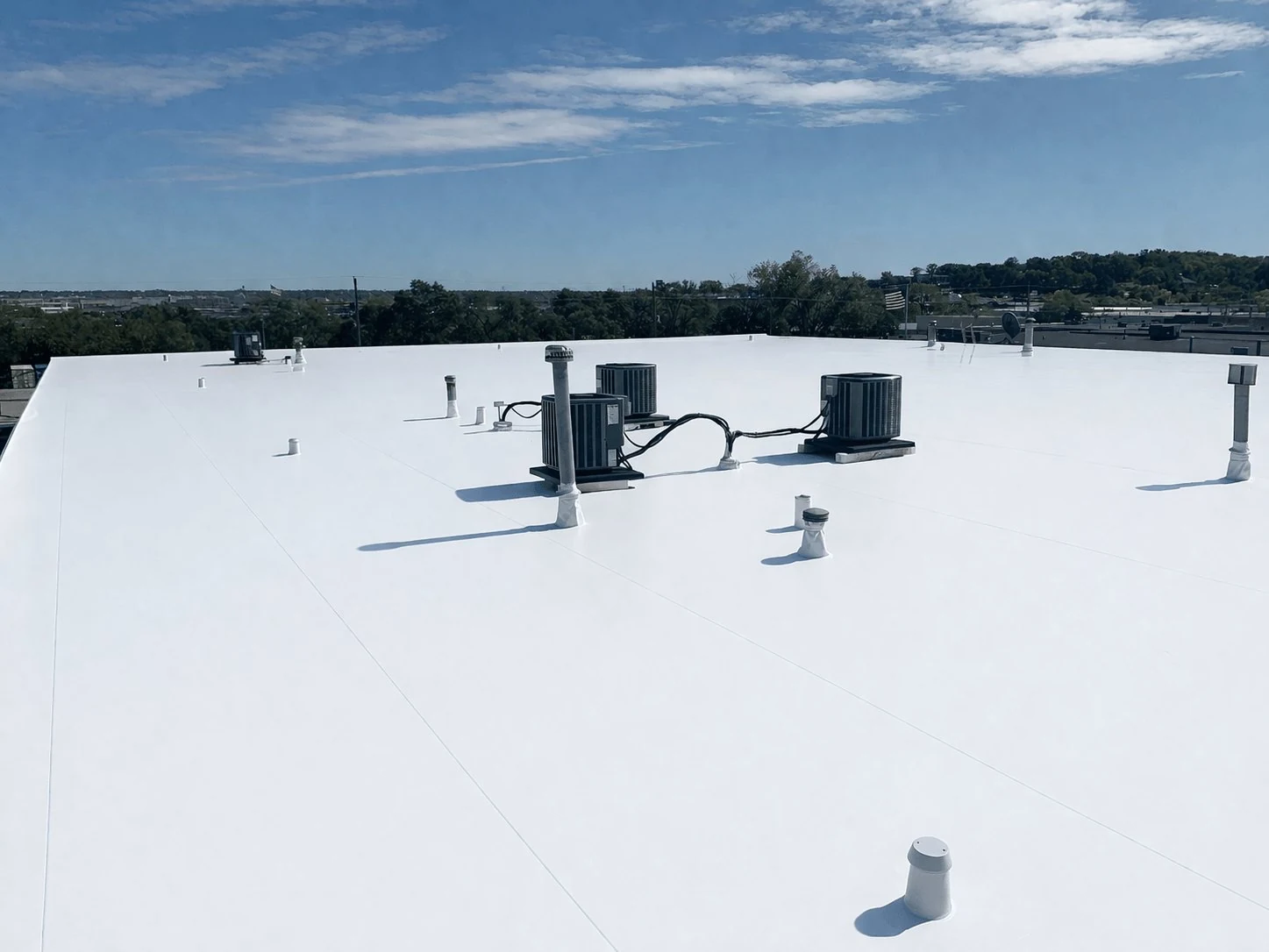
80-Mil TPO Roofing in Scranton, PA
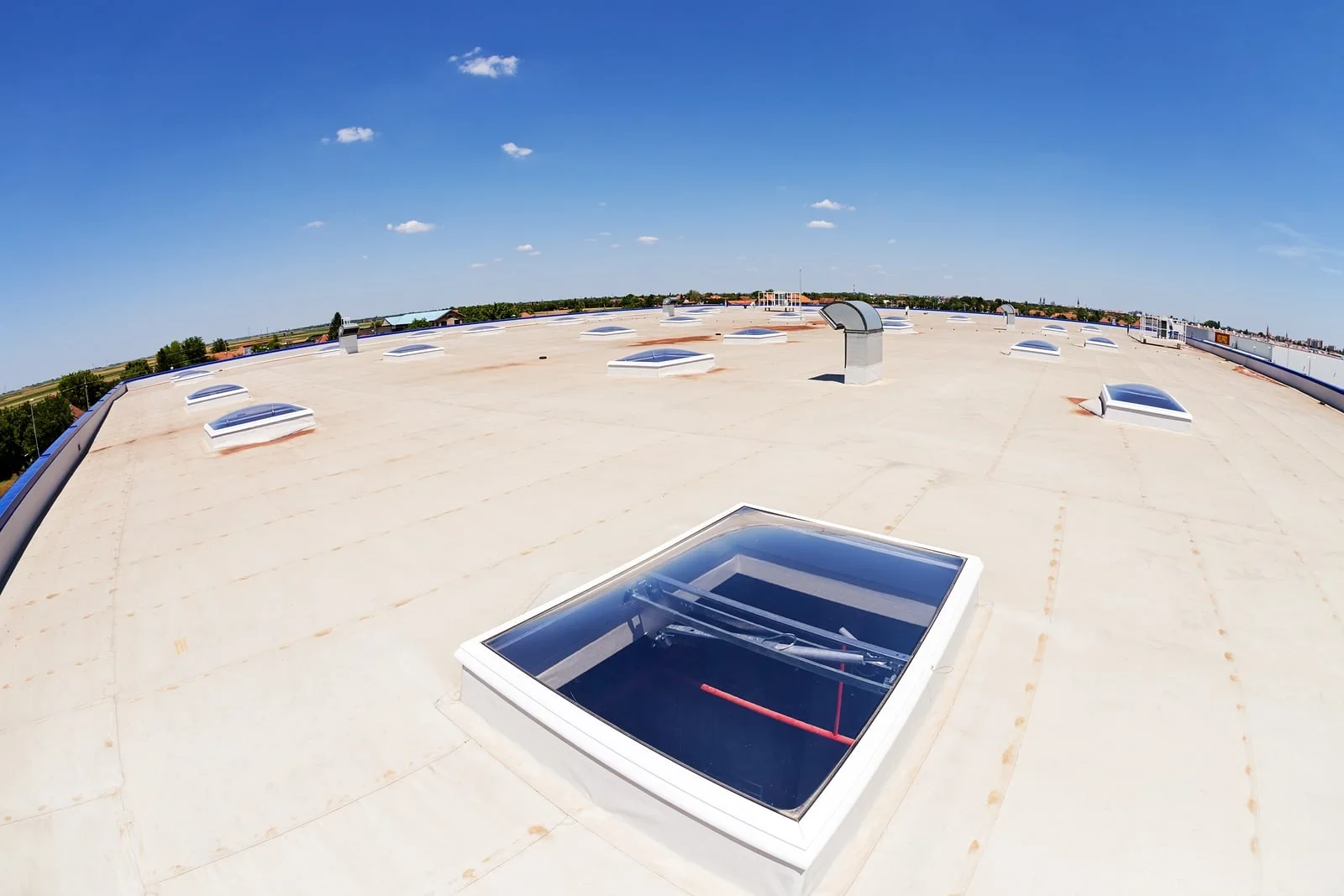
Heavier-Gauge TPO for the I-81 Distribution Corridor
The million-square-foot fulfillment roofs going up along I-81 through Hazleton, Jenkins Township, and Pittston Township carry a different load profile than a small office building, and the gauge we spec reflects that. Eighty-mil TPO is our default starting point on these giant flat roofs before we even look at manufacturer or color.
Why Gauge Goes Up on Million-Square-Foot Roofs
A distribution center roof this size carries rooftop units, catwalks, skylights, and eventually solar racking, all of it concentrated traffic on a membrane that also has to survive whatever the trailer yard and forklift-fed dock operation throws at it over the years. Puncture and impact resistance scale with thickness more directly than most other membrane properties, so we push gauge up before we push anything else.
Amazon and Chewy-scale facilities near Hazleton's Humboldt Industrial Park and the CenterPoint parks straddling Jenkins Township and Pittston Township are the roofs where 80-mil earns its keep fastest, simply because of the acreage and equipment density involved.
Snow Drift Loading Against Parapets and Screen Walls
NEPA sits on the Pocono Plateau's western edge, high enough that lake-effect-style snow bands pile up fast and unevenly across a flat roof this size. Drift doesn't distribute the way a snow-load calculation on paper assumes - it stacks against parapets, RTU curbs, and mechanical screen walls, sometimes tripling the load in a strip a few feet wide while the rest of the field stays clear.
We map drift-prone zones on every DC roof we work, because that's also where membrane sees the most abrasion from ice movement and the most ponding once the drift finally melts. Eighty-mil gives more margin in those zones than a thinner membrane would, and we sometimes add reinforced walkway pads or extra cover board thickness in the worst spots rather than treat the whole roof identically.
Phasing Membrane Work Around Live Dock Doors
A distribution center doesn't stop running because a roof crew is on site, and we plan the job around that reality rather than the other way around. Reroof and recover work gets staged in sections that keep dock doors clear of material staging, keep fall protection anchors out of active forklift lanes, and keep any open membrane away from the roof edge above a live dock during shift changes.
We coordinate directly with facility operations on timing before the crew shows up, not after, because a logistics building's schedule doesn't bend for a roofing crew's convenience. The building keeps loading trucks; the roof gets replaced around that.
- Rooftop units, catwalks, and skylight penetrations concentrated across large flat fields
- Drift loading against parapets, RTU curbs, and mechanical screen walls
- Live dock-door operations that can't pause for staging or material delivery
- Forklift and trailer traffic beneath the roof edge during active shifts
- Eventual rooftop solar racking adding permanent foot-traffic zones
Rooftop Equipment Traffic and Puncture Resistance
Maintenance techs walk these roofs constantly for HVAC service, and every service call is a chance to puncture a thin membrane if walkway protection isn't planned into the layout from day one. We route designated walk paths to major equipment clusters and spec walkway pads at the busiest access points rather than leaving techs to cross bare membrane.
Eighty-mil's extra thickness buys real margin against the accidental drop of a tool or a hard-soled boot catching a lap edge, which matters more on a roof that gets visited weekly than one that sees a tech twice a year.
Insulation and Cover Board Choices Under 80-Mil TPO
The membrane gauge is only part of the assembly on a distribution center roof this size. We spec cover board thickness and insulation package based on the same drift-zone mapping we do for the membrane, sometimes adding a heavier cover board specifically at parapet lines and screen-wall perimeters where drift concentration and ice movement do the most abrasive damage over a winter season.
On a roof feeding refrigerated dock areas or temperature-sensitive storage zones, the insulation package also has to hold its R-value under sustained load from racking or rooftop mechanical equipment, beyond simply resisting compression on a spec sheet. We coordinate that spec with the general contractor's engineering team on new-construction jobs rather than default to a standard warehouse package across every building.
Eighty-Mil TPO on Distribution Roofs, Answered
Is 80-mil TPO required for all distribution center roofs?
Not required by code, but it's our standard recommendation on large flat DC roofs given the equipment density and traffic these buildings see. We'll spec 60-mil on a smaller flex building without that load profile - see our 60-mil TPO page.
How does snow drift get factored into a DC roof reroof?
We walk the roof and map where drift historically accumulates against parapets and screen walls, then adjust membrane thickness, cover board, or drainage detailing in those zones specifically rather than spec the whole roof identically.
Can reroofing happen without shutting down warehouse operations?
Yes, on most jobs. We phase work in sections and coordinate staging and access with facility operations so dock doors and forklift lanes stay clear during active shifts.
Does 80-mil TPO cost significantly more than 60-mil?
There's a real material cost difference, but on a roof this size the incremental cost per square foot is usually a smaller factor in the total bid than membrane color, insulation package, and drainage work.
How often should rooftop units be inspected on a DC roof?
We recommend inspection at each seasonal service visit rather than a fixed interval, since equipment density and access frequency vary building to building.
Ready to review the roof scope?
Request a Roof AssessmentRelated Commercial Roofing