Built-Up Roofing in Scranton, PA
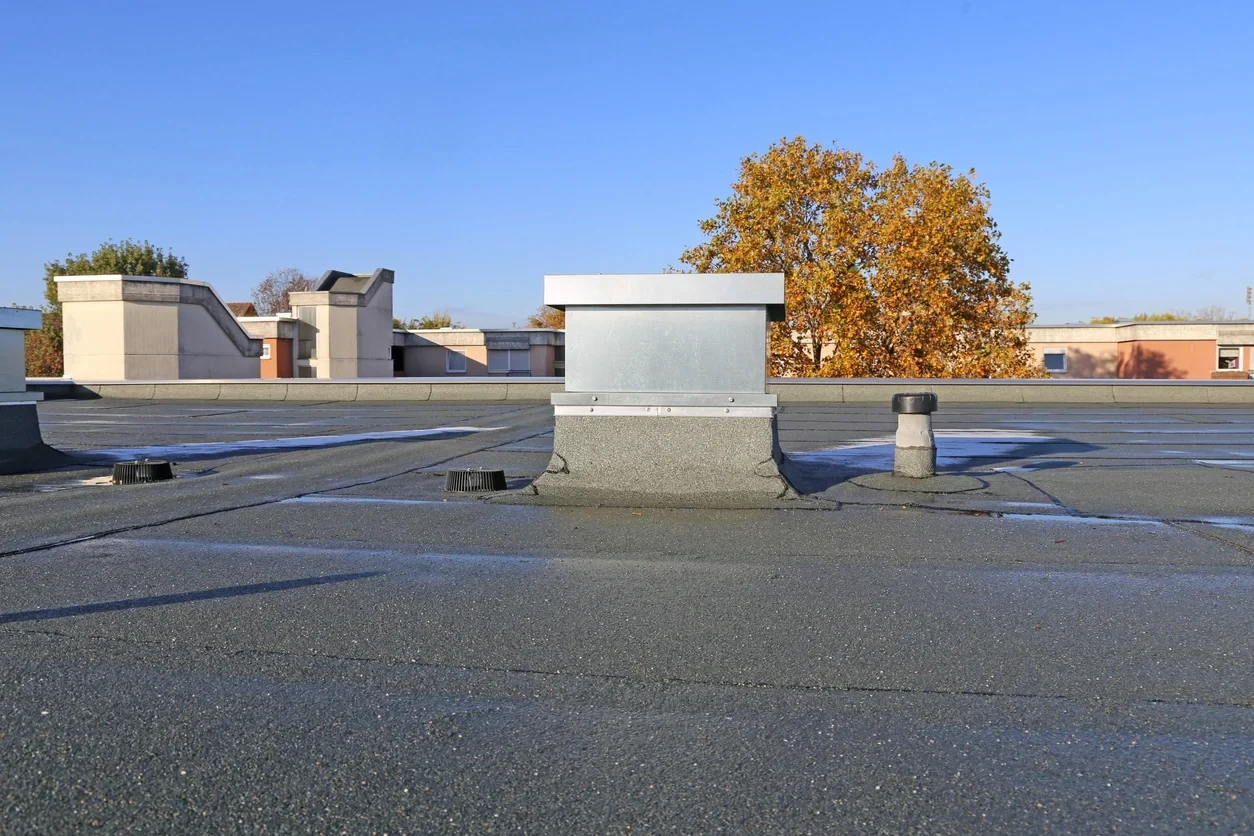
Built-Up Roofing for Hospitals, Schools, and Government Buildings
Built-up roofing is the oldest system still in wide use, and it survives on institutional buildings for a specific reason: multi-ply asphalt and felt construction handles heavy foot traffic, rooftop mechanical loads, and decades of service better than anything lighter. We specify it where the building justifies the weight and cost.
Why Institutions Still Specify Built-Up Roofing
Hospitals, colleges, and government buildings in Wilkes-Barre and the surrounding county seat area tend to have large, heavily serviced roofs with technicians, contractors, and maintenance staff walking the deck routinely. A single-ply membrane wears faster under that kind of repeated foot traffic than a multi-ply built-up system with a gravel or mineral cap surface protecting the plies underneath.
These buildings also change slowly. A hospital wing or a county administration building gets renovated in phases over decades rather than replaced, and a roof specified for a 30-plus year service life fits that ownership pattern better than a system optimized for lowest upfront cost.
Budget cycles play into this too. Public and institutional buildings often work on multi-year capital planning schedules rather than an owner's discretionary timeline, so the roof decision gets made once and needs to hold up through a long stretch before the next reroof budget line even comes up for discussion.
Multi-Ply Systems Over Hospital and Surgery Center Decks
A surgery center roof cannot have unplanned downtime, and it usually carries a dense concentration of rooftop mechanical equipment supporting air handling and sterile environment controls. Built-up roofing's redundant ply construction means a single puncture or localized failure does not immediately compromise the whole system the way it can on some single-ply membranes, since multiple layers still separate the interior from the weather.
We coordinate closely with facilities staff on hospital and medical campus roofs specifically because access, noise restrictions, and infection-control protocols around fresh air intakes all shape how and when work can happen, more than on a typical commercial building.
Gravel Surfacing and Foot Traffic on Campus Buildings
Higher education buildings, including facilities connected to campuses in Dunmore and the college buildings around downtown Wilkes-Barre, often have roof access built into routine maintenance schedules for HVAC servicing, antenna work, and periodic inspection. A gravel-surfaced built-up roof tolerates that ongoing traffic in a way that a thin single-ply membrane does not, since the ballast layer absorbs wear before it ever reaches the membrane plies.
Gravel surfacing also adds UV protection and impact resistance, which matters on a campus building where the roof might see occasional equipment drops or tool contact during unrelated maintenance work by other trades.
Phasing BUR Work Over an Occupied Building
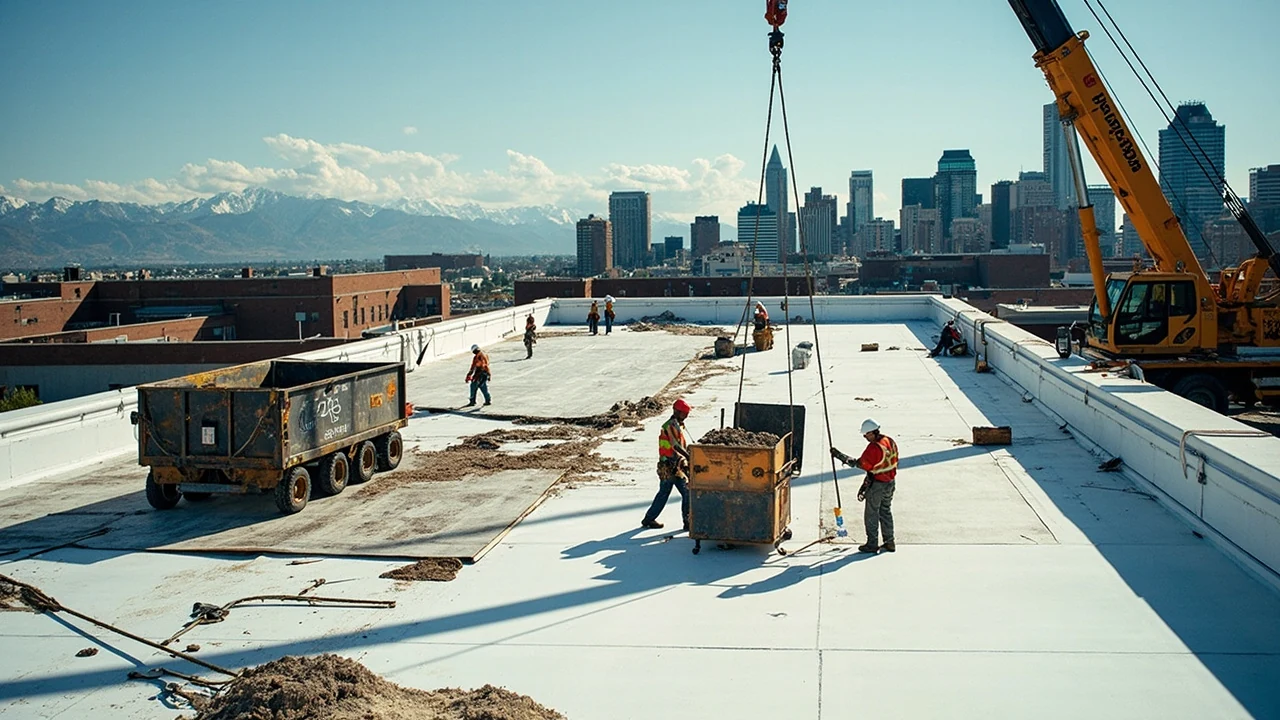
Government and healthcare buildings in Luzerne and Lackawanna counties do not close for a reroof. We phase built-up roofing installation the same way we phase any occupied-building project, working section by section so operations underneath continue without interruption. Considerations that shape a hospital or municipal phasing plan include:
- Operating room air handling zones that cannot see dust or debris intrusion during tear-off
- Emergency department access points that need to stay completely clear
- Noise-sensitive hours around patient rooms or courtroom sessions
- Fire watch requirements during hot asphalt kettle operations
- Coordinated scheduling with other active capital projects on the same campus
Kettle operations for hot asphalt are a bigger logistical consideration on built-up roofing than on other systems, and we plan kettle placement and fire watch procedures before work begins rather than figuring it out on site.
Where BUR Falls Short on Warehouse Roofs
Built-up roofing is heavy, and that weight is a liability rather than an asset on a large single-story distribution building where the structure was engineered for a lighter roof assembly. It also takes longer to install than single-ply systems, which matters more on a warehouse that needs to keep loading trucks than on an institutional building with a slower pace of change.
For the distribution centers and flex buildings along I-81, we typically recommend TPO or PVC instead, reserving built-up roofing for the institutional and government building stock where its durability and traffic tolerance actually pay off.
Kingston's medical office buildings across the river from Wilkes-Barre are a middle case worth mentioning. Some of those buildings are light enough structurally that built-up roofing is not practical, while others, particularly older masonry buildings, can carry it comfortably. That is a structural engineering question we answer before recommending either direction.
Built-Up Roofing Questions From Facility Managers
How long does a built-up roof typically last on an institutional building?
Well-maintained built-up roofing routinely delivers multi-decade service life, which fits the long ownership horizon typical of hospitals, colleges, and government buildings.
Can you install built-up roofing on an occupied hospital wing?
Yes, with a phasing plan set around the building's specific access, noise, and air handling requirements. We coordinate directly with facilities staff before scheduling any work.
Is gravel surfacing required, or are there other cap sheet options?
Gravel is common on buildings with routine roof traffic, but mineral-surfaced cap sheets are also available where a lighter, lower-maintenance surface fits the building better.
Why would a warehouse not use built-up roofing?
Weight and install speed are the two main reasons. Single-ply systems fit large flat warehouse roofs and fast phased schedules better than a heavier multi-ply system.
How do you manage fire risk from hot asphalt kettles on an occupied campus?
We plan kettle placement, fire watch staffing, and coordination with the building's own fire safety protocols before any hot work begins, not as an afterthought once crews are on site.
Ready to review the roof scope?
Request a Roof AssessmentRelated Commercial Roofing