
Commercial Roof Leak Repair in Scranton
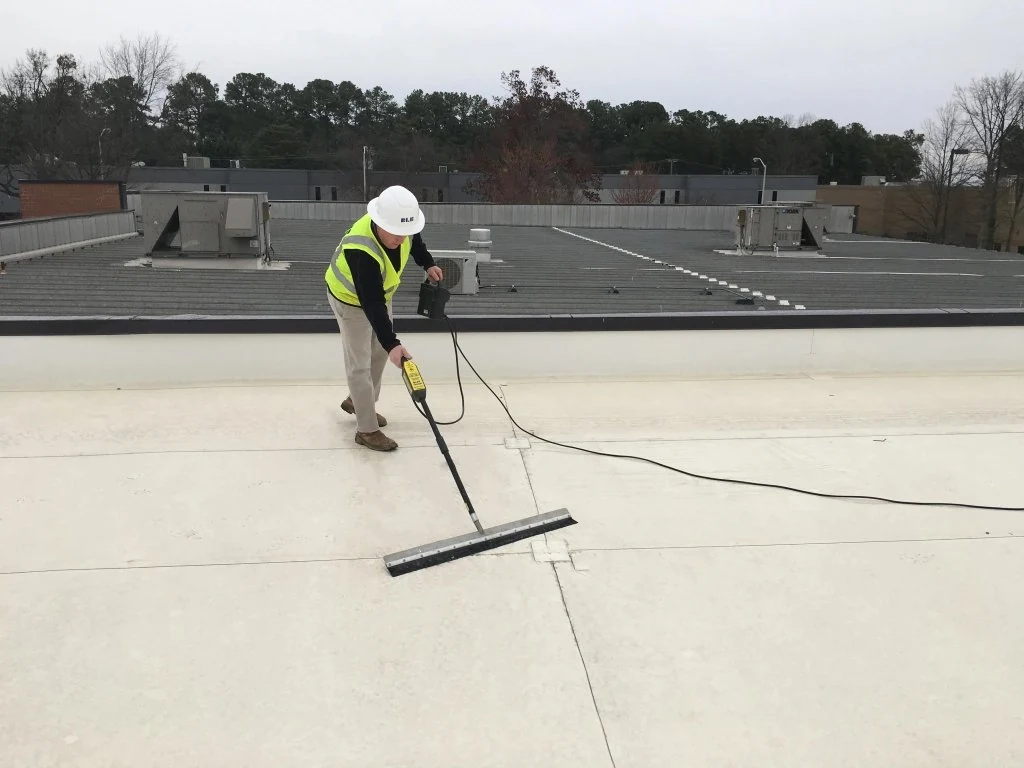
The scope documents leak sources, repair boundaries, photos, and priorities so Scranton owners can separate immediate stabilization from longer-term capital work. A leak inside a distribution center rarely shows up where it started. Water tracks along a purlin or a piece of racking and drips somewhere thirty feet from the actual opening in the membrane, and chasing that opening down fast, without guessing, is most of what this service is. On the flat and low-slope roofs common around Scranton and Wilkes-Barre, the source is usually a handful of predictable spots, but predictable does not mean obvious from the ground.
Where Leaks Actually Start on This Region's Roofs
Ice damming is the leading cause we trace back on roofs here. Wet, heavy snow melts against a warm roof deck near a rooftop unit or a poorly insulated section, refreezes at a cold parapet or overhang, and backs water up under the membrane laps. By the time it shows up as a ceiling stain in March, the actual failure point has been open since January.
Ponding after spring thaw is the other big one. When several feet of accumulated snow melts fast across a large flat roof, drains that were fine all winter can get overwhelmed for a few days, and any seam or flashing detail sitting in that standing water longer than it should is where we find the leak. Roof-top unit curbs, old abandoned penetrations, and pitch pockets round out the rest of the list, especially on the older manufacturing buildings that have had equipment added and removed over the decades.
Finding the Source Without Guessing
We start every leak call with the interior evidence: where the stain is, what shape it is, whether it tracks along a structural member. That tells us roughly which zone of roof to walk. From there it is a methodical walk of that zone checking seams, penetrations, and drainage paths rather than a blanket resurface of an area that might not even be the problem.
On roofs with a known history of ice damming, we also check insulation condition around the suspect area, because a membrane patch over wet insulation is a repair that fails again within a season. If we find that, we tell the owner plainly that the fix needs to include drying out or replacing that section of insulation, since sealing the top alone will not solve it.
Repairing Without Shutting Down the Floor Below
Most of the leak calls we take are on buildings running product underneath the exact section of roof that needs work. We coordinate with the facility team before a crew ever gets on the roof, and we protect whatever is on the floor below with tarping or temporary containment while the repair is underway, especially over racking holding anything moisture-sensitive.
A handful of things determine how fast we can get a leak closed once we are on site:
- Whether the source is a clean membrane seam versus a flashing detail that needs to be rebuilt
- Access to the affected roof zone and whether rooftop units block a direct path
- Weather window available to complete the repair and let it cure or set properly
- Whether wet insulation underneath needs to be cut out before the membrane can be resealed
- How much of the interior area below needs protection while the crew works overhead
Most single-source leaks close out in a single visit. Leaks tied to a broader ice-damming pattern across a roof section sometimes need a follow-up scope once the full extent of wet insulation is mapped.
Documenting the Repair for Your Records
Every leak repair gets photographed before, during, and after, with notes on what was found and what was done to fix it. That record goes to the facility manager, and it becomes part of the building's maintenance history, which matters if a similar leak shows up again nearby or if the roof's overall condition comes up during an insurance review.
If a leak turns out to be tied to storm damage rather than normal wear, we flag that distinction clearly in our notes, since that changes how the repair should be paid for and documented. See our insurance documentation support for how that process works.
When a Leak Is a Symptom of Something Bigger
Sometimes a leak repair call turns into a bigger conversation. If we find the same membrane seam failing in three places across a roof, or insulation wet across a wide section from years of slow ice-dam intrusion, patching each spot individually stops making sense. We will tell an owner directly when a section of roof has moved past spot repair and into recover or reroof territory, covered in our commercial reroofing service, rather than billing for repeat visits to the same failing area.
Leak Repair Questions We Hear Most
How fast can you get someone out for an active leak?
Active leaks over product or equipment get priority scheduling, and we coordinate arrival with your facility team so access is ready when the crew shows up.
Why does our leak only show up during a thaw, not during the snow itself?
That pattern almost always points to ice damming. The water intrusion happens as snow melts and refreezes at the roof edge, and it can take days for it to track far enough to show up inside.
Can you repair a leak without us moving racking or product?
In most cases yes, we protect the area below with tarping rather than requiring a full clear-out, though we will ask for the immediate footprint under the work to be kept clear.
Will you know if the leak is actually storm damage?
We document the condition and cause plainly. If it looks storm-related rather than routine wear, we say so in writing, which matters for how the repair gets handled on the insurance side.
What if the same spot leaks again next winter?
That usually means the underlying insulation was never fully dried out or the surrounding membrane has more wear than the original patch addressed, and we will scope a broader repair rather than patching the same spot a third time.
Build a roof record another decision-maker can use
A decision-grade Scranton roof record includes the affected interior zone, roof-area map, repair history, membrane condition, wet-area indicators, photographs, test locations, and the exact limits of the proposed repair. Conditions should be organized by roof area and priority rather than buried in a chronological photo dump. The practical method is to trace the water path from the interior evidence back through roof elevations, seams, penetrations, curbs, walls, edges, and drains instead of sealing the first suspicious detail. Where destructive or electronic testing is proposed, the scope should identify its purpose, limitations, and restoration procedure before work begins. The closeout should identify today's completed scope and tomorrow's unresolved work independently. That structure is especially important when several vendors, tenants, or ownership representatives will rely on the same roof file.
Do not force different roof systems into one repair assumption
Roof-system identification changes the diagnosis. Around Scranton, the target page inventory includes Silicone Roof Coating, TPO 80 Mil, and PVC Roof Systems, each with its own seam, flashing, fastener, and compatibility questions. Record membrane type, surfacing, insulation and cover-board clues, attachment, flashings, penetrations, edges, and earlier repairs. If the assembly cannot be confirmed visually, say so and define the core or document review needed to confirm it. Drainage stays in the analysis because a sound patch cannot correct water held against a curb, an overloaded outlet, or settlement at a low point. System language should support whether the defect is isolated, whether trapped moisture changes the scope, and whether continued spot repair remains defensible instead of functioning as a product catalog.
Keep the occupied building in the scope
A technically correct detail is only part of the job at Scranton properties such as General Contractors, Food Processing Cold Storage, and Manufacturing Operators. The plan also has to protect people, inventory, equipment, and normal access below the roof. The pre-work review should locate safe access, occupied areas, shutdown constraints, fire or security procedures, rooftop equipment, pedestrian controls, and interior protection. The building contact should know which decisions are needed before mobilization. Operating controls are roof-quality controls. Water, debris, odor, noise, or an unsecured access point can harm the owner even when the installed detail itself is correct, so those risks need owners and closeout checks.
Use condition thresholds instead of sales pressure
Before pricing becomes the focus, ownership needs an answer to whether the defect is isolated, whether trapped moisture changes the scope, and whether continued spot repair remains defensible. That answer should define the boundary between service work and a capital project. Decision thresholds include moisture extent, remaining secure attachment, deck condition, prior repair performance, drainage, assembly compatibility, operational risk, budget timing, and the period the owner expects the roof to remain in service. Ownership should be able to see why a roof can be maintained, why it qualifies for restoration, or why removal is necessary. The report earns that conclusion through field evidence rather than sales urgency.
Carry today's evidence into the next roof decision
The work becomes more valuable when it leads to an inspection that separates an isolated repair from restoration, recover, or replacement planning. A service call, inspection, and capital project should use one continuous property and roof-area history. A persistent roof file connects dates, weather, symptoms, findings, repairs, costs, and follow-up. Trends become visible: recurring locations, growing wet areas, drainage issues, or a rising frequency of unrelated failures. The result is more than a completed patch or proposal. It is a controlled sequence from immediate response to documented condition, from condition to an appropriate option, and from that option to scheduled stewardship of the roof asset.
Give the first call enough information to work
Before dispatch, collect the address, responsible building contact, safe access route, occupied area below the problem, time and behavior of the leak, known roof type, and any temporary protection already attempted at the Scranton property. If the building has prior reports, warranties, repair invoices, roof plans, or known drain locations, those records can shorten the investigation. They should be treated as history to verify, not as proof that the present failure has the same cause. That intake determines whether the immediate need is interior protection, controlled roof access, weather-limited stabilization, drainage attention, or a scheduled diagnostic visit. It also gives the crew a safer and more focused starting point.
Make allowances and exclusions visible
A proposal should distinguish verified quantities from allowances and investigation from construction. Roof area, repair limits, test cuts, wet-material removal, deck repair, drain work, equipment coordination, and interior protection can carry different pricing certainty. Exclusions should not function as an escape hatch. Each exclusion needs a reason and, where practical, a defined way to resolve it through testing, access, document review, engineering, or a unit-price condition discovered during construction. When assumptions are visible, the owner can decide whether to investigate further before award or carry a controlled contingency. Either choice is stronger than discovering that two supposedly comparable bids covered different roofs.
Connect the roof problem to the building and weather
A Scranton roof review has to account for seasonal rainfall, wind, rooftop temperature movement, and changing access conditions. Those conditions affect access, observation timing, drying, and temporary protection before they affect the final recommendation. Interior evidence should be mapped to a roof elevation before anyone chooses a drain, wall, curb, seam, penetration, or edge as the cause. Water can move laterally through insulation, along deck flutes, or down structural elements and appear away from the opening. This distinction protects the owner from treating a correlation as proof. It also lets the next technician revisit the precise unknown instead of repeating the entire investigation.
Scranton decision checklist
- Map the interior symptom to a named roof area before selecting a repair detail.
- Record temporary measures separately from permanent work and list every open item.
- Verify drainage, penetrations, walls, edges, earlier repairs, and transitions around the affected area.
- State the observed roof assembly, unknown construction, access limits, and testing assumptions.
- Connect the recommendation to repair, restoration, replacement, maintenance, or capital-planning thresholds.
- Set the next inspection or follow-up date so the roof history continues after this visit.
Commercial roof decision questions
Does this condition automatically mean the roof must be replaced?
No. The review should establish whether the defect is isolated, whether trapped moisture changes the scope, and whether continued spot repair remains defensible. Replacement becomes a defensible recommendation only when the field evidence, moisture, assembly condition, repair history, deck or attachment concerns, and lifecycle comparison support it.
What should the Scranton roof scope document?
It should document the affected interior zone, roof-area map, repair history, membrane condition, wet-area indicators, photographs, test locations, and the exact limits of the proposed repair. It should also label temporary and permanent work separately, state assumptions and exclusions, and identify the inspection or service step that follows the current scope.
How does an urgent call become a maintenance or capital plan?
The immediate visit creates the first roof-area record. A follow-up inspection establishes condition and priorities. Completed repairs, recurring observations, drain service, warranties, and future recommendations are then retained so maintenance stays scheduled and larger work can be placed into the appropriate capital year.
From service call to roof plan
Use the next decision, not the biggest sale.
Stabilize the problem, document the roof, compare the viable paths, and keep the resulting roof history active.
Water is entering nowEmergency Roof ResponseDocument condition and causeCommercial Roof InspectionTest whether service life can be extendedRoof Restoration and CoatingPlan recover or tear-off when neededCommercial Roof ReplacementSequence roofs and future budgetsRoof Asset Management and Capital PlanningKeep inspections and small work scheduledPreventive Roof Maintenance