
Commercial Roof Restoration and Coating in Scranton
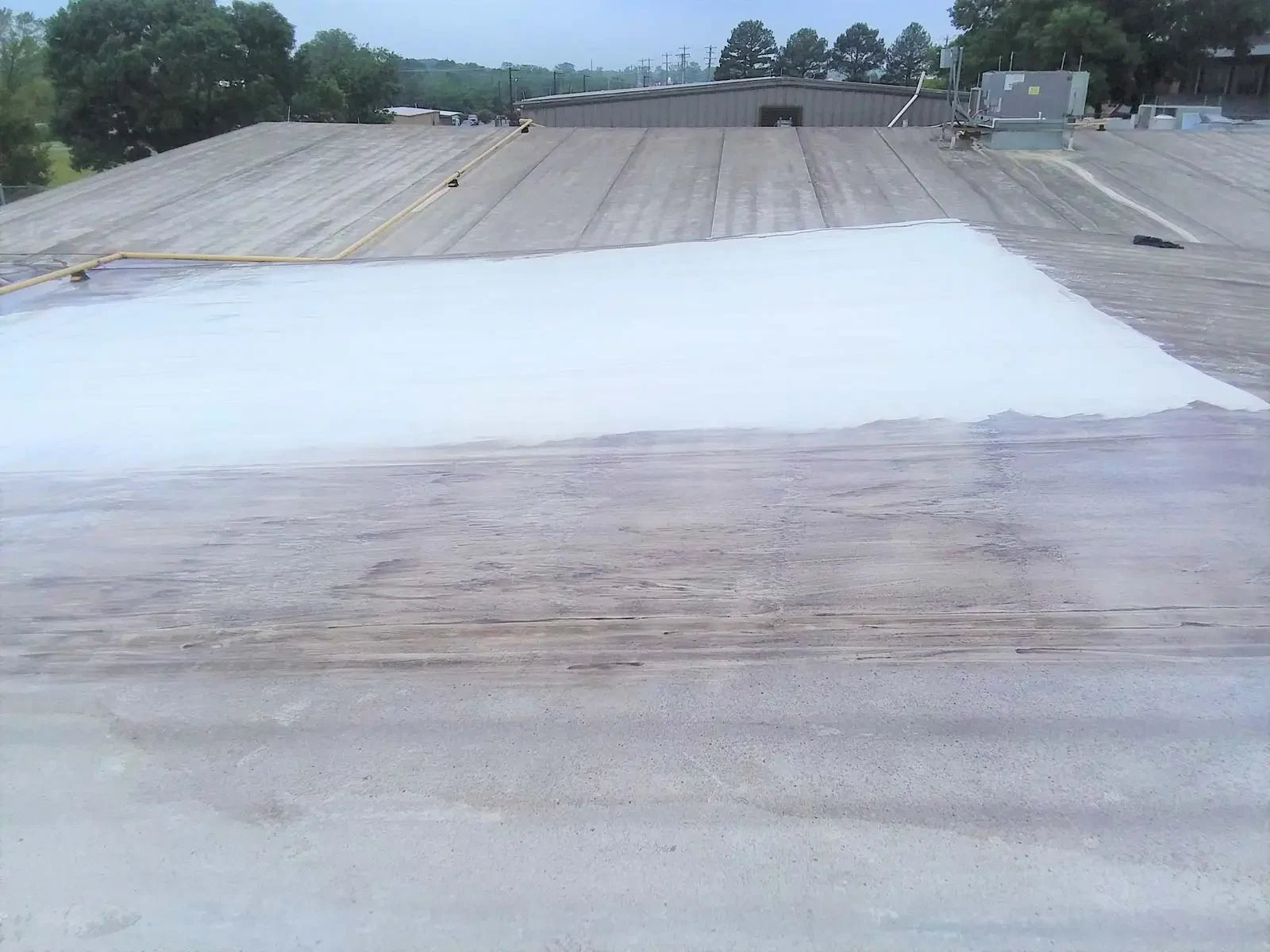
A roof that is leaking at a few isolated points but still structurally sound and mostly dry underneath is often a coating candidate, not a tear-off candidate. Silicone coating buys years of additional service life at a fraction of full replacement cost, and we recommend it whenever the underlying roof actually qualifies.
Coating Instead of Tearing Off an Aging Roof
Older flex buildings along the Route 11 corridor through Wyoming and Exeter, along with aging warehouse stock elsewhere in the market, frequently reach a point where the membrane surface has degraded from UV exposure but the insulation and deck below are still dry and performing. Tearing that roof off and starting over wastes the useful life still left in the existing system.
Silicone coating applies directly over most existing membrane types, including EPDM, modified bitumen, and aged metal, creating a new fully adhered, monolithic weatherproofing layer over what is already there. It is a restoration strategy, not a replacement, and we are direct with clients about which category their roof actually falls into before recommending it.
Surface preparation drives most of the outcome on a coating job. Pressure washing, biological growth treatment, and priming on certain substrates all happen before a single gallon of silicone goes down, and skipping steps here is the most common reason a coating job underperforms its expected service life.
Silicone and Ponding Water on Flat Warehouse Roofs
Silicone's biggest practical advantage over other coating chemistries is genuine tolerance for standing water. A lot of older flat roofs in low-lying areas near West Pittston and Wyoming, both close to the Susquehanna floodplain, have drainage that was never great to begin with, and ponding after a heavy rain is a regular occurrence rather than a rare event.
Acrylic coatings soften and degrade under sustained ponding. Silicone does not, which makes it the right chemistry choice specifically for roofs where drainage correction is not practical or affordable and some ponding will simply keep happening after every storm.
Reflectivity and Rooftop Temperatures in Distribution Buildings
A fresh silicone coating in white or light gray dramatically increases roof surface reflectivity compared to an aged, UV-degraded membrane that has darkened and chalked over the years. On a distribution building running rooftop HVAC or refrigeration equipment, that reflectivity reduction in surface temperature translates into lower cooling load and less thermal cycling stress on the roof assembly overall.
Older EPDM roofs in particular benefit here, since black rubber membrane that has spent fifteen or twenty years absorbing sun exposure runs hot, and a reflective silicone topcoat both protects the membrane and cuts that heat load meaningfully.
What a Roof Needs Before Coating Makes Sense
Coating is not a fix for every aging roof, and applying it to a roof that is not a good candidate just delays an inevitable tear-off while adding cost. Before recommending silicone coating, we confirm:
- Core cuts show dry insulation with no widespread moisture intrusion
- The existing membrane is structurally sound rather than only cosmetically weathered
- Seams and flashing details are in repairable condition, not failed throughout
- The roof deck itself shows no rot or structural compromise
- Drainage is adequate enough that coating addresses surface issues, not a design flaw
When those conditions check out, coating is genuinely the better financial decision. When they do not, we say so and talk through replacement instead of selling a coating job that will fail within a year or two.
Recoat Cycles and Realistic Expectations
Silicone coating is not a one-time forever fix. It is a maintenance strategy that extends roof life through periodic recoating, typically on a cycle measured in years rather than decades. We set that expectation clearly upfront, including what a recoat involves and roughly when the next one should happen, so there are no surprises down the line.
Coating thickness matters more than most people realize. A thin, undersized coating application fails faster and does not deliver the ponding water resistance that makes silicone worth choosing over a cheaper alternative in the first place.
We measure applied thickness during the job rather than only estimating from gallons purchased, since roof geometry, wind conditions during spraying, and substrate texture can all cause coverage to vary across the same roof. Verifying thickness at multiple points is part of how we back up the recoat interval we give a client.
Silicone Coating Questions From Property Owners
How do I know if my roof is a good candidate for coating instead of replacement?
We start with a core cut to check insulation moisture and a full inspection of seams and flashing. That tells us definitively whether coating or replacement is the right call.
Does silicone coating really handle ponding water better than other coatings?
Yes, that is silicone's main chemical advantage over acrylic coatings, which is why we specify it specifically on roofs with known drainage limitations.
How long does a silicone coating last before it needs to be recoated?
It depends on coating thickness and roof exposure, but most silicone coating systems are designed for a multi-year service window before a recoat is needed.
Can silicone coating be applied over an old EPDM roof?
Yes, with proper surface preparation and primer where needed. Aged EPDM is one of the more common substrates we coat in this market.
Will coating stop an active leak, or just slow down general wear?
Both, when applied correctly. Active leak points get addressed with targeted repair before the coating goes on, and the coating then protects the whole roof surface going forward.
Turn the visit into a usable next step
After this scope, the record should advance to a documented comparison of repair, restoration, recover, and replacement rather than a coating-first recommendation. Carrying the same roof-zone names and evidence forward prevents the next visit from starting with an empty file. A persistent roof file connects dates, weather, symptoms, findings, repairs, costs, and follow-up. Trends become visible: recurring locations, growing wet areas, drainage issues, or a rising frequency of unrelated failures. Recurring service should not disappear when a capital project begins. Commercial Roofing of Scranton can preserve the agreement and roof history while larger work is scoped, completed, closed out, and returned to inspection status.
A useful response starts before roof access
Before dispatch, collect the address, responsible building contact, safe access route, occupied area below the problem, time and behavior of the leak, known roof type, and any temporary protection already attempted at the Scranton property. If the building has prior reports, warranties, repair invoices, roof plans, or known drain locations, those records can shorten the investigation. They should be treated as history to verify, not as proof that the present failure has the same cause. That intake determines whether the immediate need is interior protection, controlled roof access, weather-limited stabilization, drainage attention, or a scheduled diagnostic visit. It also gives the crew a safer and more focused starting point.
Price the known work without hiding the unknowns
Pricing is easier to evaluate when the scope shows which conditions were measured, which were observed but not opened, and which remain concealed. Unit prices or allowances can address uncertainty without pretending the quantity is already known. Schedule assumptions also belong beside price: weather windows, material lead time, permits, shutdowns, tenant coordination, daily dry-in, and access restrictions. An unexplained low number can become an expensive sequence of changes if these constraints are omitted. Closeout requirements should be priced as part of the work: final photographs, repair locations, warranty or material records, open punch items, and the next recommended inspection. Those documents keep the completed scope connected to the roof plan.
How Scranton operating conditions shape the review
A Scranton roof review has to account for seasonal rainfall, wind, rooftop temperature movement, and changing access conditions. Those conditions affect access, observation timing, drying, and temporary protection before they affect the final recommendation. The review should connect the time and location of water entry with roof zones, elevations, drainage paths, and construction transitions. That map helps distinguish one isolated defect from several conditions activated by the same rainfall. A useful report does not hide uncertainty. It names the unverified areas, explains why they were inaccessible, and states which follow-up observation or test would resolve the question.
Build a roof record another decision-maker can use
A decision-grade Scranton roof record includes roof type and age, core or moisture findings, repair boundaries, substrate condition, adhesion results, drainage, penetrations, edge details, preparation, thickness assumptions, and exclusions. Conditions should be organized by roof area and priority rather than buried in a chronological photo dump. The field sequence is to confirm the existing assembly, investigate moisture, test adhesion where appropriate, define repairs and preparation, and verify that drainage and details can support the proposed system. Photographs should show context and detail, and test locations should explain what question was being answered and how the opening was closed. The closeout should identify today's completed scope and tomorrow's unresolved work independently. That structure is especially important when several vendors, tenants, or ownership representatives will rely on the same roof file.
Do not force different roof systems into one repair assumption
PVC Roof Systems, TPO 60 Mil, and TPO 80 Mil can show a similar interior symptom while requiring different investigation and repair details. The observed assembly—not a generic flat-roof label—has to control the scope. Record membrane type, surfacing, insulation and cover-board clues, attachment, flashings, penetrations, edges, and earlier repairs. If the assembly cannot be confirmed visually, say so and define the core or document review needed to confirm it. A localized defect may be repairable while saturated insulation or chronic ponding changes the wider recommendation. That is why roof construction and moisture evidence must be connected to whether the roof is a viable restoration candidate, whether only selected areas qualify, or whether recover or replacement is the more responsible path.
Keep the occupied building in the scope
Building operations change how the same roof work is performed. On Healthcare Systems, Insurance Restoration, or General Contractors, access, interior sensitivity, security, and working hours can define the safe sequence. Access and protection notes should cover ladders or hatches, staging, falling-object zones, odor and noise, equipment clearances, daily cleanup, weather stops, and the rooms directly below openings or test cuts. Wet-weather work may stop at stabilization because permanent materials need a clean, dry substrate and a workable forecast. Daily closeout should state what was opened, completed, and left under temporary protection.
Use condition thresholds instead of sales pressure
Before pricing becomes the focus, ownership needs an answer to whether the roof is a viable restoration candidate, whether only selected areas qualify, or whether recover or replacement is the more responsible path. That answer should define the boundary between service work and a capital project. Decision thresholds include moisture extent, remaining secure attachment, deck condition, prior repair performance, drainage, assembly compatibility, operational risk, budget timing, and the period the owner expects the roof to remain in service. Ownership should be able to see why a roof can be maintained, why it qualifies for restoration, or why removal is necessary. The report earns that conclusion through field evidence rather than sales urgency.
Scranton decision checklist
- Map the interior symptom to a named roof area before selecting a repair detail.
- Record temporary measures separately from permanent work and list every open item.
- Verify drainage, penetrations, walls, edges, earlier repairs, and transitions around the affected area.
- State the observed roof assembly, unknown construction, access limits, and testing assumptions.
- Connect the recommendation to repair, restoration, replacement, maintenance, or capital-planning thresholds.
- Set the next inspection or follow-up date so the roof history continues after this visit.
Commercial roof decision questions
Does this condition automatically mean the roof must be replaced?
No. The review should establish whether the roof is a viable restoration candidate, whether only selected areas qualify, or whether recover or replacement is the more responsible path. Replacement becomes a defensible recommendation only when the field evidence, moisture, assembly condition, repair history, deck or attachment concerns, and lifecycle comparison support it.
What should the Scranton roof scope document?
It should document roof type and age, core or moisture findings, repair boundaries, substrate condition, adhesion results, drainage, penetrations, edge details, preparation, thickness assumptions, and exclusions. It should also label temporary and permanent work separately, state assumptions and exclusions, and identify the inspection or service step that follows the current scope.
How does an urgent call become a maintenance or capital plan?
The immediate visit creates the first roof-area record. A follow-up inspection establishes condition and priorities. Completed repairs, recurring observations, drain service, warranties, and future recommendations are then retained so maintenance stays scheduled and larger work can be placed into the appropriate capital year.
From service call to roof plan
Use the next decision, not the biggest sale.
Stabilize the problem, document the roof, compare the viable paths, and keep the resulting roof history active.
Water is entering nowEmergency Roof ResponseDocument condition and causeCommercial Roof InspectionDefine the permanent repairCommercial Roof Leak RepairPlan recover or tear-off when neededCommercial Roof ReplacementSequence roofs and future budgetsRoof Asset Management and Capital PlanningKeep inspections and small work scheduledPreventive Roof Maintenance