
Commercial Roof Maintenance and Service Agreements in Scranton
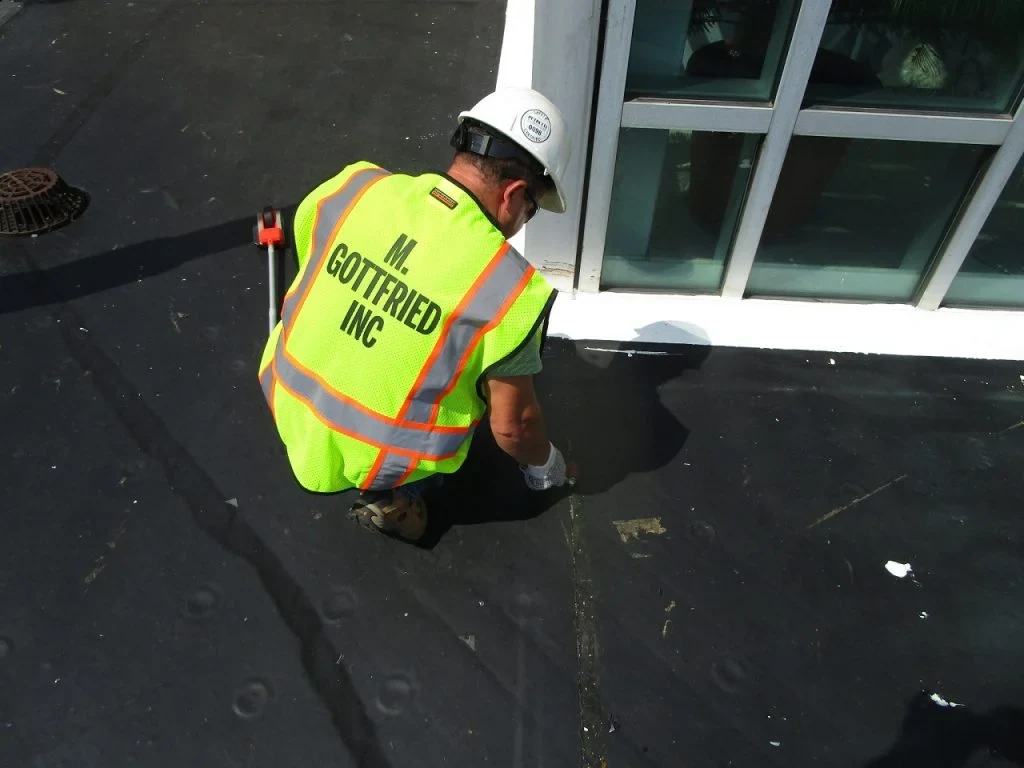
A useful maintenance program records recurring conditions, clears drainage, services vulnerable details, tracks repairs, and turns each visit into a prioritized roof history. Nearly every emergency leak call we take traces back to something small that went unaddressed for a year or two: a clogged drain, a seam that started separating, a piece of flashing that was never re-terminated after a rooftop unit swap. A maintenance program is how we stop that pattern before it turns into an emergency call at two in the morning during a February snowmelt.
Building a Schedule Around This Region's Weather
A generic quarterly maintenance visit does not fit how weather actually hits a roof in the Wyoming Valley. We build programs around the two events that do the most damage here: the heavy, wet snow that piles up and drifts against parapets and rooftop units all winter, and the fast spring thaw that follows it, which can dump weeks of accumulated snowmelt onto a roof's drainage system in a matter of days.
That means a maintenance visit ahead of the first hard freeze to make sure every drain and scupper is clear and every seam is sealed before snow starts piling up, and a second visit in early spring, timed to get ahead of thaw, not after it, to clear anything that built up over winter and to check for damage before it turns into a leak. A third visit before summer thunderstorm season rounds out the core cycle for most buildings.
What Actually Happens on a Maintenance Visit
A maintenance visit is not a repeat of a full inspection, though it uses the same eyes. The crew clears debris from drains and scuppers, checks and reseals any seam or flashing detail showing early wear, confirms rooftop equipment has not shifted or been serviced in a way that compromised the membrane around it, and touches up any minor deficiency on the spot rather than logging it for a future visit.
Anything beyond the scope of routine maintenance, like a section of insulation that has gone wet or a flashing detail that needs to be rebuilt, gets documented and priced separately so the maintenance contract does not turn into an open-ended repair bill. Owners get a clear line between what is included and what is a distinct scope of work.
What a Program Saves You Over Reactive Repairs
The math on preventive maintenance is straightforward once you have seen enough emergency calls: a clogged drain caught in October costs a few minutes of a crew's time. The same clogged drain, found in March after it caused ponding that worked its way under a seam, can mean a section of wet insulation, a leak over active racking, and an emergency dispatch on a weekend. A handful of things a maintenance program is specifically built to catch before they escalate:
- Drain and scupper blockages before they cause ponding under snow load
- Seam separation at the earliest visible stage, before water gets underneath
- Flashing pulled loose by wind or ice, before it opens a path for water
- Rooftop equipment penetrations disturbed by other trades working on the roof
- Early membrane wear at high-traffic walkway zones near rooftop units
- Debris accumulation from nearby tree cover or construction dust settling on the roof
Every one of those is inexpensive to fix on a scheduled visit and expensive to fix as an emergency once it has caused interior damage.
Budgeting and Reporting for Facility Teams
Facility managers running a portfolio, or even a single large building, need to plan capital spending ahead of time rather than simply react to it. Every maintenance visit produces a short report with photos, so the same document a facility manager uses to schedule this year's work also becomes the record they use to justify next year's roof budget to ownership or to a corporate real estate team.
Over several years on a program, that record also becomes the clearest evidence of a roof's real remaining life, which feeds directly into planning for eventual reroofing on the owner's own timeline instead of on a failure's timeline.
Programs Sized to the Building, Not a Template
A 500,000 square foot distribution roof off I-81 and a small manufacturing building's roof near downtown Scranton do not need the same maintenance frequency or scope, even though both benefit from the same seasonal logic. We size the visit count, the crew size, and the drain and scupper count checked on each visit to the actual roof, not to a flat package.
Maintenance Program Questions We Get
How many visits does a typical program include per year?
Most buildings here land on three core visits: pre-winter, post-thaw, and pre-summer-storm, with the exact count adjusted based on the roof's size and history.
What if something urgent comes up between scheduled visits?
Program members get priority scheduling for anything found or reported between visits, rather than being treated as a new customer starting from scratch.
Does a maintenance program cover storm damage repair?
No, storm damage is handled separately and is often an insurance matter; see our storm damage roof repair service. The program is about routine wear and drainage upkeep, not event-driven damage.
Will you tell us honestly if our roof needs more than maintenance?
Yes. If a maintenance visit turns up something that has moved past routine upkeep, we say so directly in the report rather than continuing to patch around it.
Can you take over maintenance on a roof someone else installed?
Yes, most of the roofs on our maintenance programs were not built by us. We document the existing condition at the start so the program has an accurate baseline to work from.
What the field record must establish
The core deliverable is a record of inspection dates, roof-zone photographs, open items, completed repairs, drain-cleaning records, storm observations, warranty information, and the next planned visit. Commercial Roofing of Scranton should be able to hand that record to ownership, a facility manager, or another contractor without a separate verbal explanation. The practical method is to inspect on a repeatable schedule, clear accessible drainage, document changes, prioritize minor repairs, and preserve a usable history for every roof area. Where destructive or electronic testing is proposed, the scope should identify its purpose, limitations, and restoration procedure before work begins. Observed facts, recommended actions, completed work, and open items should never share one unlabeled list. Separating them lets an off-site approver see exactly what was authorized and what still needs a decision.
Roof-system details change the diagnosis
Roof-system identification changes the diagnosis. Around Scranton, the target page inventory includes TPO 60 Mil, Modified Bitumen Systems, and Spray Polyurethane Foam, each with its own seam, flashing, fastener, and compatibility questions. The scope should name the membrane or surface that was actually observed, identify unknown construction, and check compatibility before mastics, primers, membranes, or coatings are specified. Core information may be necessary when layers and attachment affect the option set. A localized defect may be repairable while saturated insulation or chronic ponding changes the wider recommendation. That is why roof construction and moisture evidence must be connected to which defects are routine service, which require a separate repair scope, and when the condition trend should trigger restoration or capital planning.
Plan access, interiors, tenants, and daily dry-in
Building operations change how the same roof work is performed. On Insurance Restoration, General Contractors, or Food Processing Cold Storage, access, interior sensitivity, security, and working hours can define the safe sequence. Access and protection notes should cover ladders or hatches, staging, falling-object zones, odor and noise, equipment clearances, daily cleanup, weather stops, and the rooms directly below openings or test cuts. A dry-in can be appropriate during active weather even when permanent work must wait. The crew's daily record should identify every temporary edge, cover, ballast, drain protection, and remaining exposure before leaving the property.
Separate immediate service from capital work
Before pricing becomes the focus, ownership needs an answer to which defects are routine service, which require a separate repair scope, and when the condition trend should trigger restoration or capital planning. That answer should define the boundary between service work and a capital project. Compare the distribution of wet materials, attachment and deck concerns, drainage, detail density, repair frequency, disruption, expected ownership period, energy goals, code assumptions, and warranty requirements. Cost without those differences is not a lifecycle comparison. This prevents an urgent call from becoming an automatic reroof pitch. It also prevents endless patches from consuming money on a roof whose moisture, failures, or lifecycle cost has crossed a reasonable replacement threshold.
The handoff should survive the service call
The work becomes more valuable when it leads to a service agreement that remains active while larger repair or replacement projects are scoped separately. A service call, inspection, and capital project should use one continuous property and roof-area history. A persistent roof file connects dates, weather, symptoms, findings, repairs, costs, and follow-up. Trends become visible: recurring locations, growing wet areas, drainage issues, or a rising frequency of unrelated failures. The result is more than a completed patch or proposal. It is a controlled sequence from immediate response to documented condition, from condition to an appropriate option, and from that option to scheduled stewardship of the roof asset.
Collect the details that shape safe dispatch
Before dispatch, collect the address, responsible building contact, safe access route, occupied area below the problem, time and behavior of the leak, known roof type, and any temporary protection already attempted at the Scranton property. If the building has prior reports, warranties, repair invoices, roof plans, or known drain locations, those records can shorten the investigation. They should be treated as history to verify, not as proof that the present failure has the same cause. That intake determines whether the immediate need is interior protection, controlled roof access, weather-limited stabilization, drainage attention, or a scheduled diagnostic visit. It also gives the crew a safer and more focused starting point.
Define scope and pricing boundaries
A proposal should distinguish verified quantities from allowances and investigation from construction. Roof area, repair limits, test cuts, wet-material removal, deck repair, drain work, equipment coordination, and interior protection can carry different pricing certainty. Alternates are useful when they compare real decisions, such as repair versus restoration preparation or recover versus tear-off. They are less useful when major necessary work is moved out of the base price simply to make one proposal appear lower. When assumptions are visible, the owner can decide whether to investigate further before award or carry a controlled contingency. Either choice is stronger than discovering that two supposedly comparable bids covered different roofs.
Why local exposure changes the field plan
Weather around Scranton combines seasonal rainfall, wind, rooftop temperature movement, and changing access conditions. The timing of that exposure can reveal a weak detail, yet the weather event and the leak source are not automatically the same thing. The review should connect the time and location of water entry with roof zones, elevations, drainage paths, and construction transitions. That map helps distinguish one isolated defect from several conditions activated by the same rainfall. This distinction protects the owner from treating a correlation as proof. It also lets the next technician revisit the precise unknown instead of repeating the entire investigation.
Scranton decision checklist
- Map the interior symptom to a named roof area before selecting a repair detail.
- Record temporary measures separately from permanent work and list every open item.
- Verify drainage, penetrations, walls, edges, earlier repairs, and transitions around the affected area.
- State the observed roof assembly, unknown construction, access limits, and testing assumptions.
- Connect the recommendation to repair, restoration, replacement, maintenance, or capital-planning thresholds.
- Set the next inspection or follow-up date so the roof history continues after this visit.
Commercial roof decision questions
Does this condition automatically mean the roof must be replaced?
No. The review should establish which defects are routine service, which require a separate repair scope, and when the condition trend should trigger restoration or capital planning. Replacement becomes a defensible recommendation only when the field evidence, moisture, assembly condition, repair history, deck or attachment concerns, and lifecycle comparison support it.
What should the Scranton roof scope document?
It should document inspection dates, roof-zone photographs, open items, completed repairs, drain-cleaning records, storm observations, warranty information, and the next planned visit. It should also label temporary and permanent work separately, state assumptions and exclusions, and identify the inspection or service step that follows the current scope.
How does an urgent call become a maintenance or capital plan?
The immediate visit creates the first roof-area record. A follow-up inspection establishes condition and priorities. Completed repairs, recurring observations, drain service, warranties, and future recommendations are then retained so maintenance stays scheduled and larger work can be placed into the appropriate capital year.
From service call to roof plan
Use the next decision, not the biggest sale.
Stabilize the problem, document the roof, compare the viable paths, and keep the resulting roof history active.
Water is entering nowEmergency Roof ResponseDocument condition and causeCommercial Roof InspectionDefine the permanent repairCommercial Roof Leak RepairTest whether service life can be extendedRoof Restoration and CoatingPlan recover or tear-off when neededCommercial Roof ReplacementSequence roofs and future budgetsRoof Asset Management and Capital Planning