
Commercial Roofing Contractors Kingston, PA
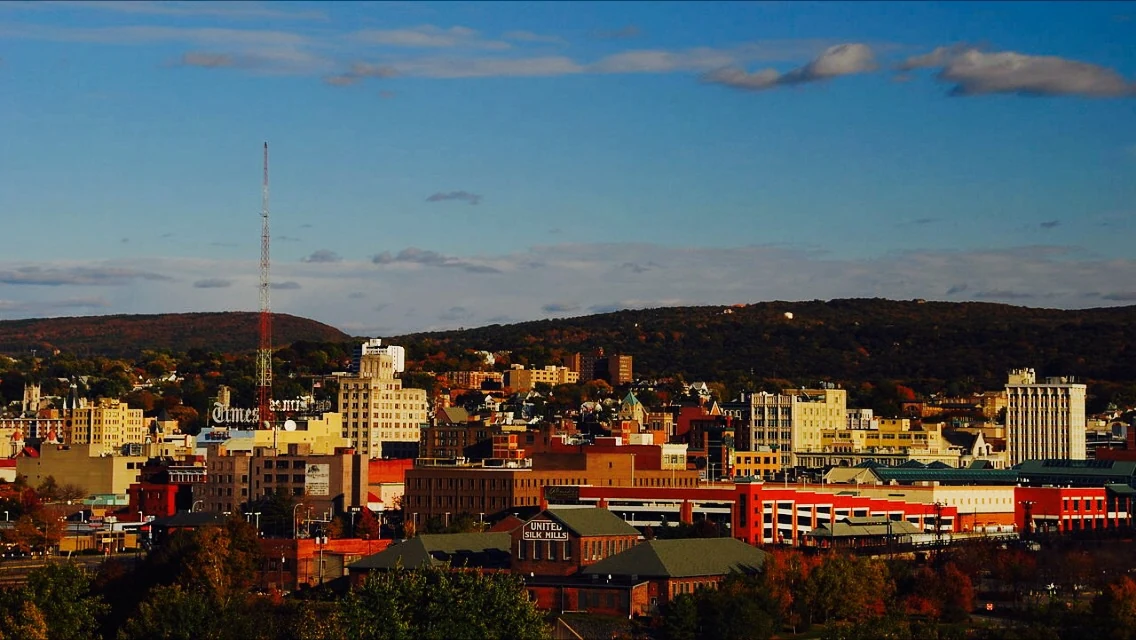
Commercial Roofers in Kingston
A practical commercial roofing plan for Kingston properties separates urgent leak control from repair, coating, maintenance, and replacement decisions supported by photos and condition findings. Kingston sits on the west side of the Susquehanna, across the river from downtown Wilkes-Barre, and its Market Street corridor carries a different building type than the industrial parks on the valley's east side: professional offices, medical office buildings, and smaller commercial storefronts. Commercial Roofing of Scranton works these roofs with the occupancy and equipment sensitivity that come with medical and office tenants in mind, not the loading-dock logistics of a warehouse job. The West Side's building stock is older on average than the industrial parks across the river, which changes the diagnostic work as much as the repair itself.
Medical Occupancy Changes the Rules
A medical office building often has diagnostic equipment, refrigerated pharmaceuticals, or exam rooms directly under the roof deck, and a leak or a poorly managed tear-off can put more than ceiling tile at risk. We plan medical building roof work around patient hours where the lease and tenant allow it, and we take extra care sealing a section down at the end of each work day rather than assuming next-day weather will cooperate. Noise matters more here too: a waiting room or exam room doesn't tolerate the same fastener-gun noise a warehouse floor shrugs off, so we sequence loud work for hours when it does the least disruption to patients and staff.
Rooftop HVAC on a medical building is also often more finely tuned than a standard office unit, maintaining tighter temperature and humidity tolerances for equipment or medication storage. We coordinate curb flashing work with whoever services that equipment so a roofing repair doesn't become an HVAC problem.
Office Buildings: Smaller Roofs, More Penetrations Per Square Foot
The professional office buildings along Market Street and the surrounding streets tend to have a smaller footprint than a warehouse or big-box retail roof, but they often carry a denser mix of penetrations: multiple smaller HVAC units serving individual suites, communication and data conduits, and older buildings with roof-mounted mechanical additions from decades of tenant changes. That density means more places for water to find a way in, even on a roof that isn't especially old.
A number of these buildings are older brick-and-block construction with roofs added or modified over the building's life, which means the roof deck itself can vary in condition from section to section in ways a newer single-phase building wouldn't show.
Coordinating With Tenants As Well As the Owner
Multi-tenant office and medical buildings usually mean multiple businesses with their own hours and sensitivities, and we work through the property manager to notify tenants ahead of any work that might affect them. Even routine inspection walks can matter to a practice that doesn't want foot traffic noise during a procedure.
- Ceiling stains appearing near HVAC curb penetrations
- Older flashing at roof-mounted communication equipment
- Deck condition varying across sections of a multi-phase building
- Membrane wear concentrated around densely packed rooftop units
- Sealant failure at data and utility conduit penetrations
- Ponding near additions where roof planes meet at different heights
Older Brick-and-Block Construction Needs a Careful Look
A number of buildings along Market Street predate modern low-slope membrane roofing entirely, with a membrane system added over original brick-and-block construction at some point in the building's history. That means the roof deck itself needs assessment before we recommend a repair path, since a masonry parapet or an older wood deck behaves differently under a reroof than a steel deck on a newer building.
We pull core samples on older buildings like this before committing to a recover system, because deck condition determines what's actually possible rather than what the surface membrane alone suggests.
A building on Market Street with a masonry parapet also needs its cap flashing and coping detailed differently than a metal parapet on a newer suburban office building, and getting that detail wrong is a common source of water intrusion into the wall assembly below the roofline, beyond the interior ceiling staining that usually gets noticed first.
Questions From Kingston Office and Medical Building Owners
Can you work around patient appointment hours?
Yes, we coordinate with the practice or property manager to schedule disruptive work outside patient hours wherever the building allows it. Early mornings and weekends cover most of what a busy practice needs, and we'll plan the loudest work for those windows specifically, checking with the office first before we lock in a date.
Do you account for sensitive equipment when working near HVAC curbs?
Yes, we coordinate with the building's HVAC contractor before disturbing any curb flashing tied to equipment maintaining tight temperature or humidity tolerances.
Why do older office buildings here have such varied roof conditions?
Many were modified in phases over decades of tenant turnover, so deck condition, insulation, and membrane age can differ from one section of the roof to the next. We treat that as the starting assumption on any older Market Street building rather than something we're surprised to find.
How do you handle notifying multiple tenants in one building?
We work through the property manager to notify tenants ahead of any work, including inspection walks that could affect noise-sensitive practices.
What's the most common leak source on smaller professional office roofs?
Dense clusters of smaller HVAC units and utility penetrations, more often than the field membrane itself, given how many individual suites these buildings tend to serve. We map every penetration during an inspection so nothing gets missed on a roof this crowded.
Ready to review the roof scope?
Request a Roof AssessmentRelated Commercial Roofing