Spray Polyurethane Foam Roofing in Scranton, PA
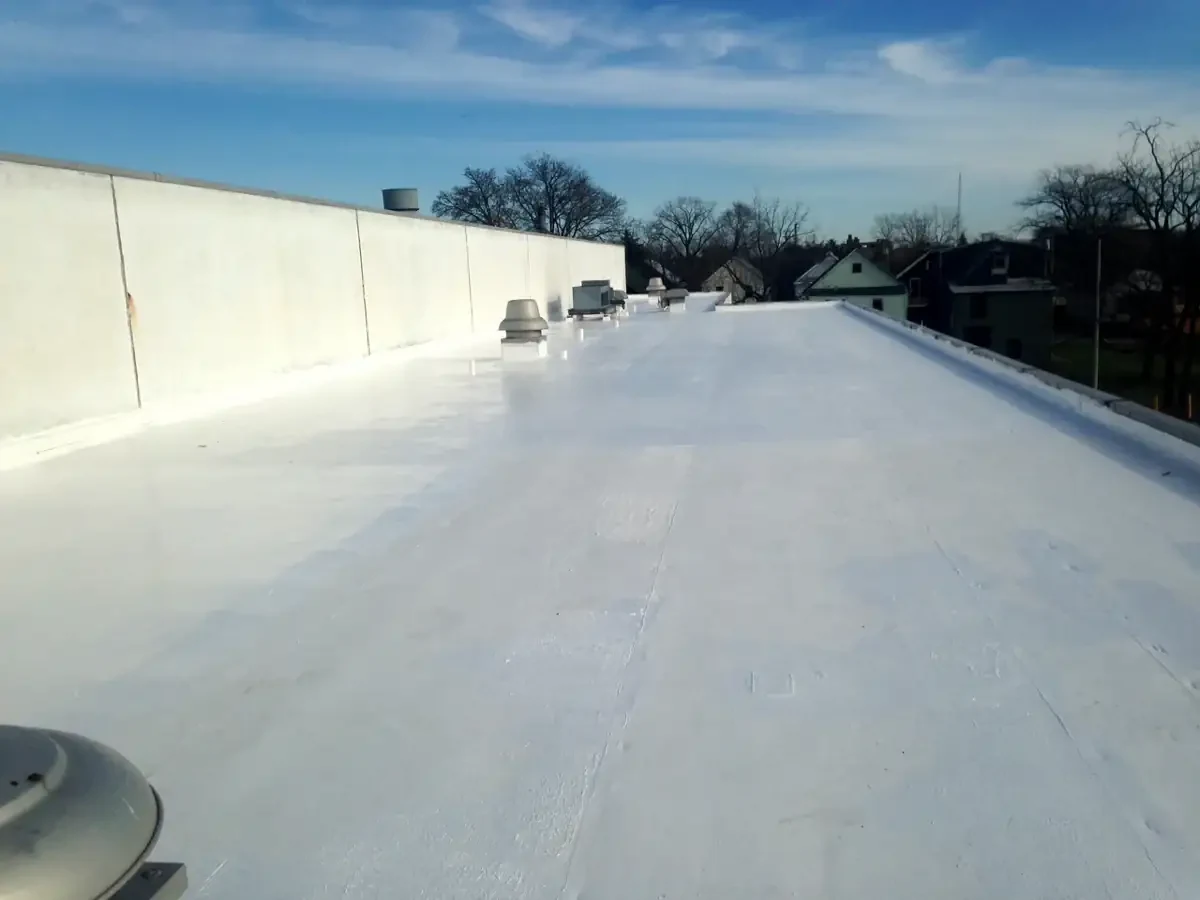
SPF Roofing for Irregular Rooflines and Added Insulation Value
Spray polyurethane foam solves a specific problem the other systems on this site don't: a roof with too many odd angles, additions, and penetrations for a seamed membrane to cover cleanly, or a building where the insulation value of the roof assembly matters as much as the waterproofing. Both situations show up often enough on older NEPA manufacturing buildings that SPF stays part of our regular spec list.
Where SPF's Self-Flashing Foam Solves a Problem Others Can't
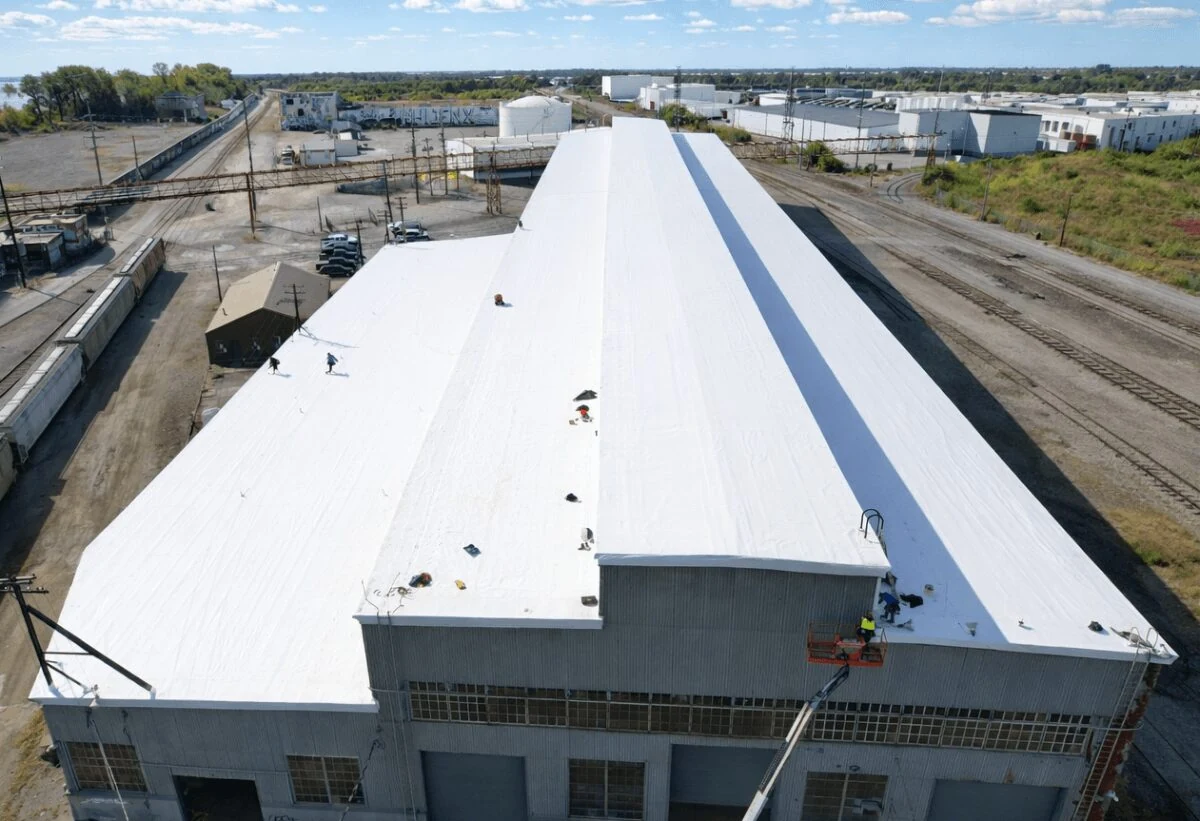
Older manufacturing plants around Nanticoke and the Mid Valley industrial sites in Olyphant tend to accumulate additions over the decades - a warehouse bay tacked onto the original building, a mechanical penthouse added mid-century, HVAC curbs from equipment installed and removed multiple times. Every one of those transitions is a potential leak point for a seamed membrane, and SPF's spray-applied foam self-flashes around irregular geometry in a way that eliminates most of those seams entirely.
On a roof with a genuinely complicated roofline, that continuous, gap-free coverage is worth more than any single membrane's puncture resistance or warranty term, because the leaks on these buildings historically start at transitions and penetrations, not in the open field.
We evaluate SPF against a modified bitumen retrofit on some of these older buildings, since both handle irregular geometry reasonably well. The deciding factor is usually whether the insulation value matters to the specific building's energy use, and how much penetration and transition detail the roofline actually carries - a roof with a handful of odd angles might still favor modified bitumen, while one with a dozen legacy additions tips toward foam.
Insulation Value on Cold-Storage and Food-Processing Roofs
SPF is applied and sprayed to thickness, which means the insulation value builds into the roof assembly itself rather than sitting as a separate board layer underneath a membrane. On cold-storage buildings and food-processing facilities near the I-81 warehouse cluster, where refrigeration load and energy cost run high year-round, that combined waterproofing-and-insulation approach can matter more than it would on a standard dry warehouse.
We spec foam thickness based on the building's actual insulation target rather than a standard default, since a cold-storage roof and a standard flex-space roof have very different R-value needs even if both are getting SPF.
Application Weather Windows in NEPA Shoulder Seasons
SPF application is more weather-sensitive than membrane installation - it needs a dry substrate, temperatures within a defined range, and humidity low enough that the foam cures correctly rather than trapping moisture. NEPA's spring and fall shoulder seasons swing unpredictably enough that we watch the forecast closely and sometimes delay a scheduled spray day rather than force an application in marginal conditions.
We build that weather sensitivity into project timelines up front so an owner isn't caught off guard by a schedule shift, and we don't compress the application window just to hit an original completion date if conditions aren't right.
Foam Thickness and Slope Correction in One Application
Because SPF is sprayed rather than laid as a fixed-thickness sheet, we can vary the foam depth across a single roof to correct minor drainage problems at the same time we're building insulation value, tapering thickness slightly toward drains and low points to move water off the field faster than the original deck slope allows on its own.
That's a real advantage on older manufacturing buildings where the deck has settled unevenly over the decades and a flat membrane sheet would just telegraph the existing low spots. We map the drainage pattern before spraying and adjust foam depth zone by zone rather than apply a uniform thickness across a roof that doesn't drain uniformly to begin with.
- Rooflines with multiple additions, penthouses, and legacy penetrations
- Cold-storage and food-processing buildings needing combined insulation and waterproofing
- Older manufacturing decks too irregular for a clean seamed-membrane layout
- Buildings where energy cost from refrigeration or process heat load is significant
- Projects with flexible enough timelines to work around NEPA's shoulder-season weather windows
Recoat Maintenance and Long-Term Upkeep
SPF roofs need a protective coating over the foam, and that coating has its own recoat cycle just like a standalone coating system does. We inspect foam roofs regularly for coating wear, particularly at high-traffic zones near rooftop equipment, and recoat proactively before UV exposure degrades the foam underneath. Treated properly on that maintenance schedule, an SPF roof can perform for a very long service life, but it's a system that rewards ongoing attention rather than a set-and-forget install.
SPF Roofing Questions
Is SPF a good fit for a simple rectangular warehouse roof?
It can be, but on a straightforward large flat roof without complex geometry, TPO often makes more sense on cost and install speed - see our 80-mil TPO page. SPF earns its place on irregular rooflines specifically.
How does SPF handle NEPA's freeze-thaw cycling?
The foam and protective coating system handles thermal movement well when properly maintained. Coating wear at high-movement zones is what we watch for during inspections.
Can SPF be applied over an existing roof?
Often, yes, provided the substrate is dry and sound. We evaluate the existing roof condition before recommending SPF as a recover option.
How often does an SPF roof need recoating?
It depends on UV exposure, traffic, and the specific coating product used. We set an inspection schedule per building and recoat based on observed wear rather than a fixed calendar interval.
Does SPF really add meaningful insulation value?
Yes - because it's sprayed to thickness as part of the roof assembly, it contributes insulation value directly, which matters most on buildings with high refrigeration or heating loads.
Ready to review the roof scope?
Request a Roof AssessmentRelated Commercial Roofing